
Last updated November 23, 2026
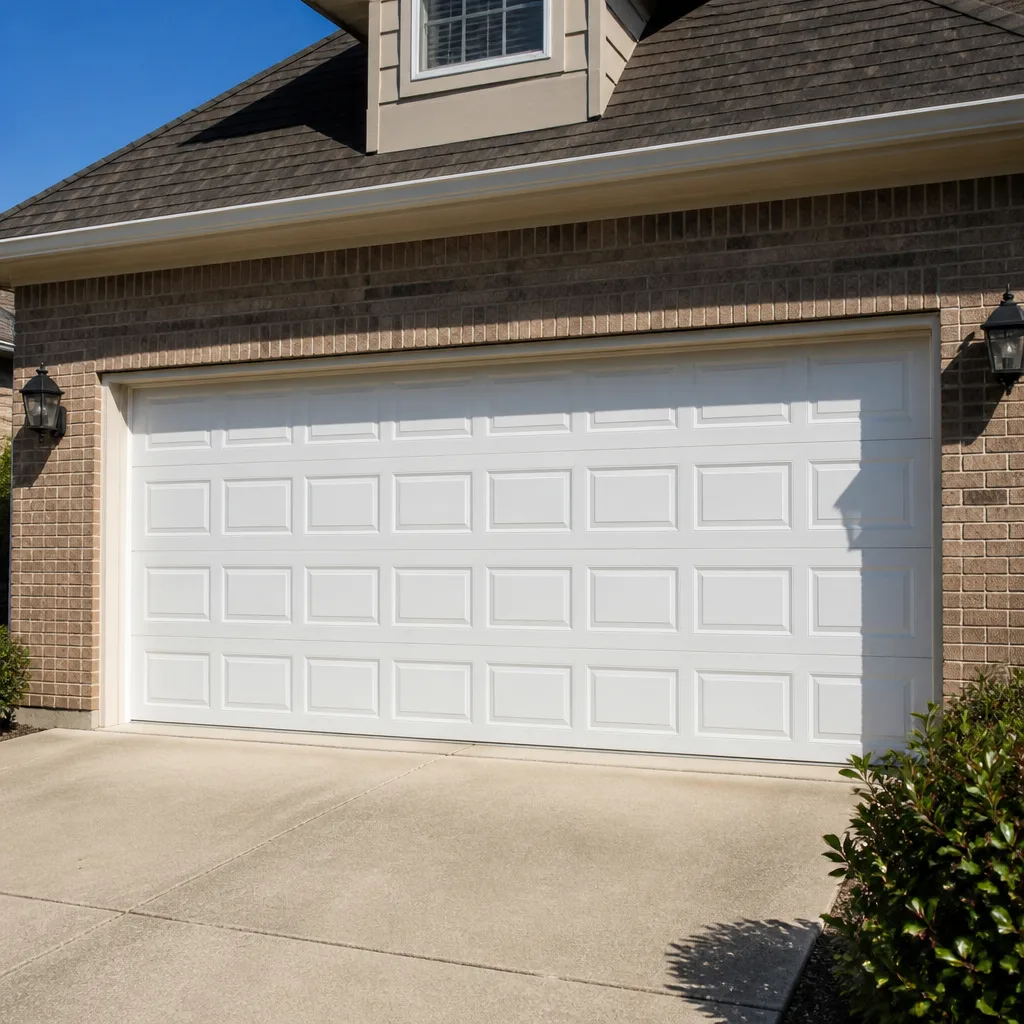 Raised-panel steel
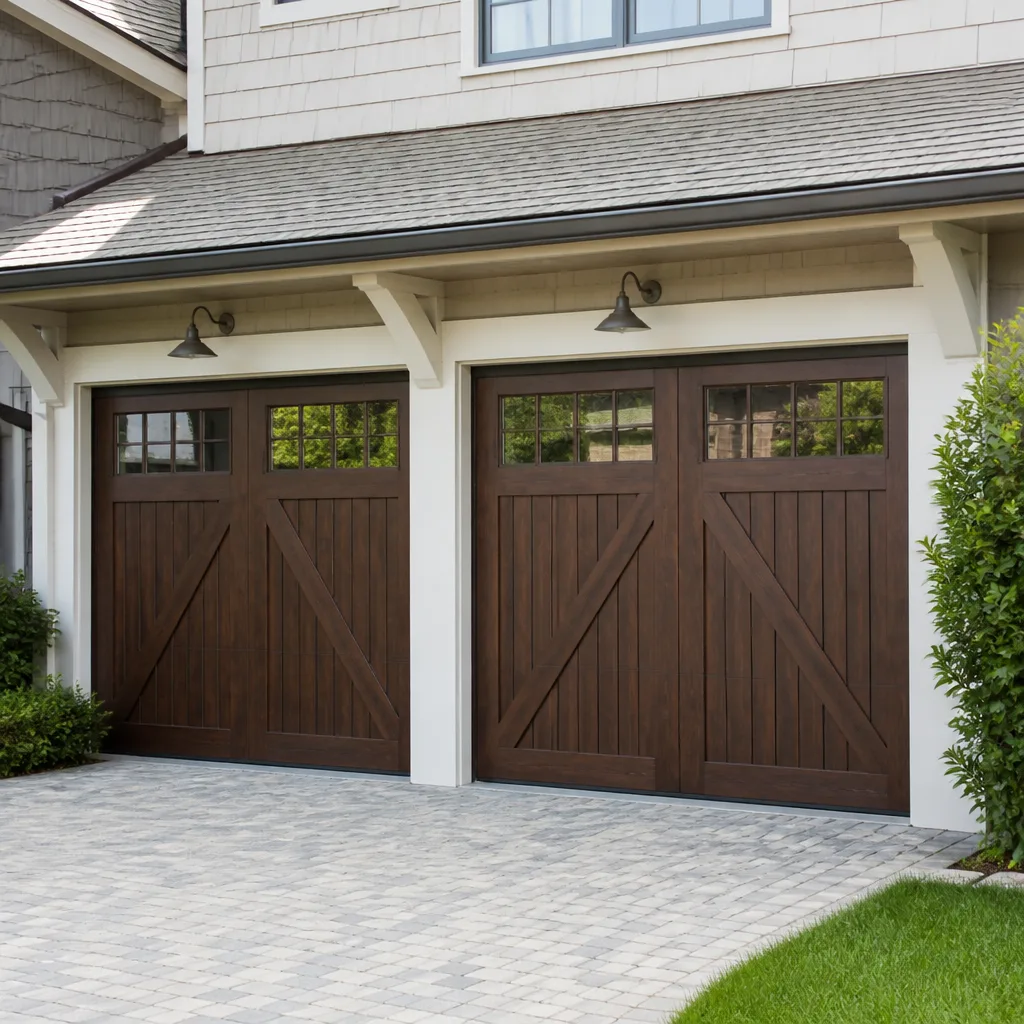 Carriage house
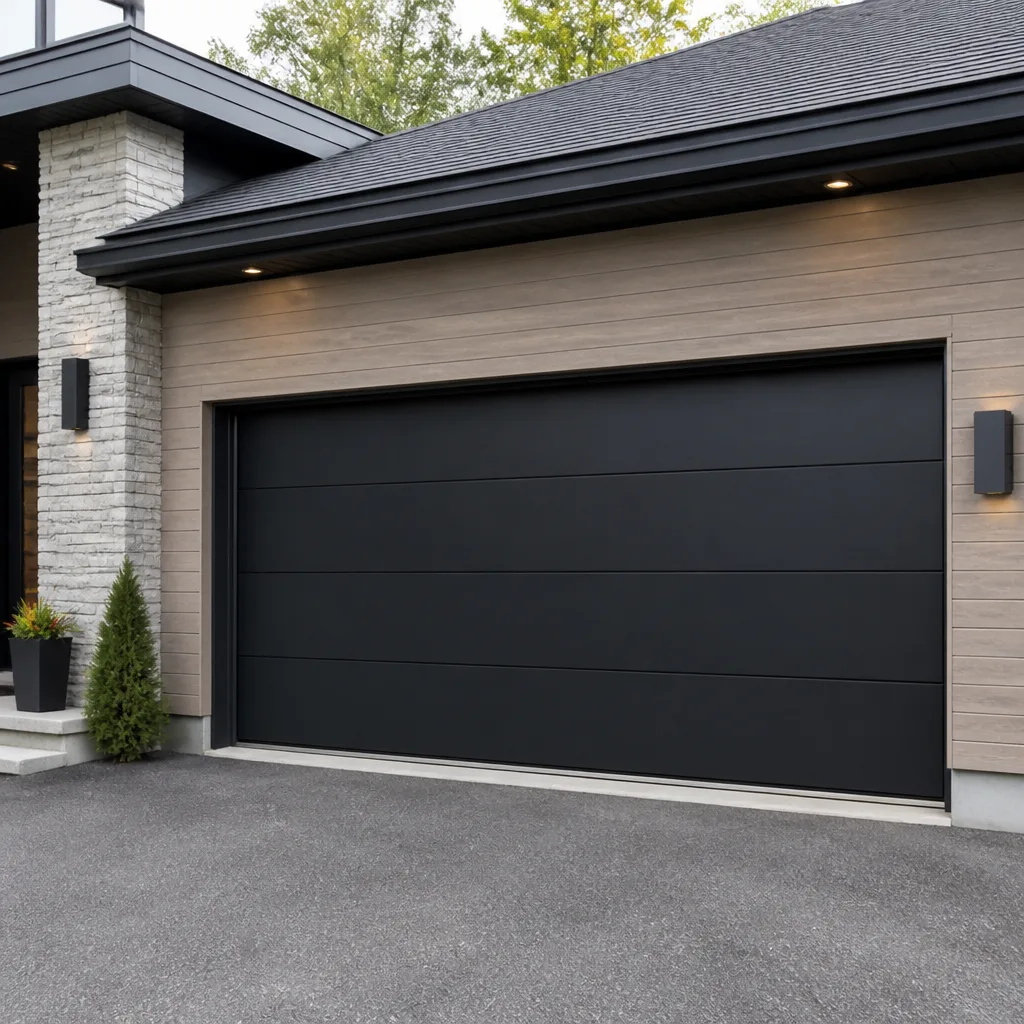 Modern flush
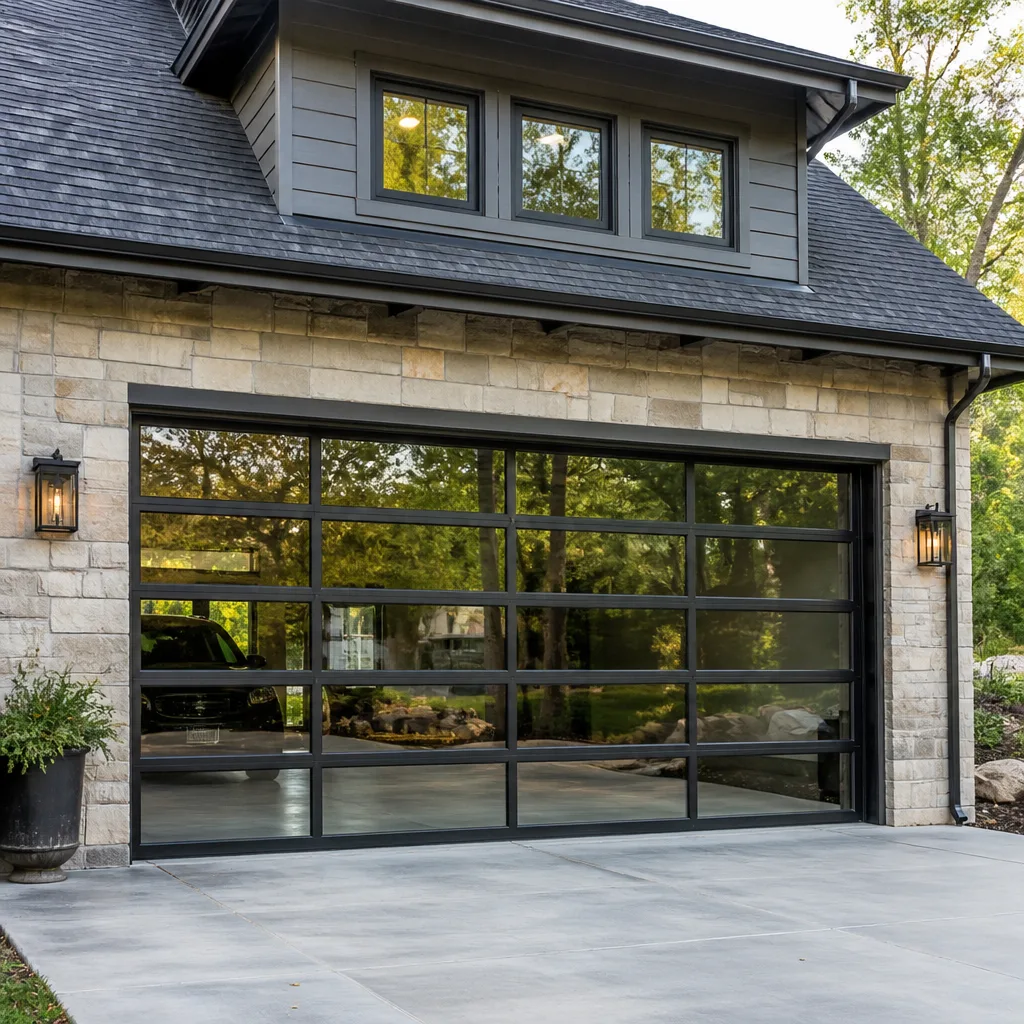 Full-view glass
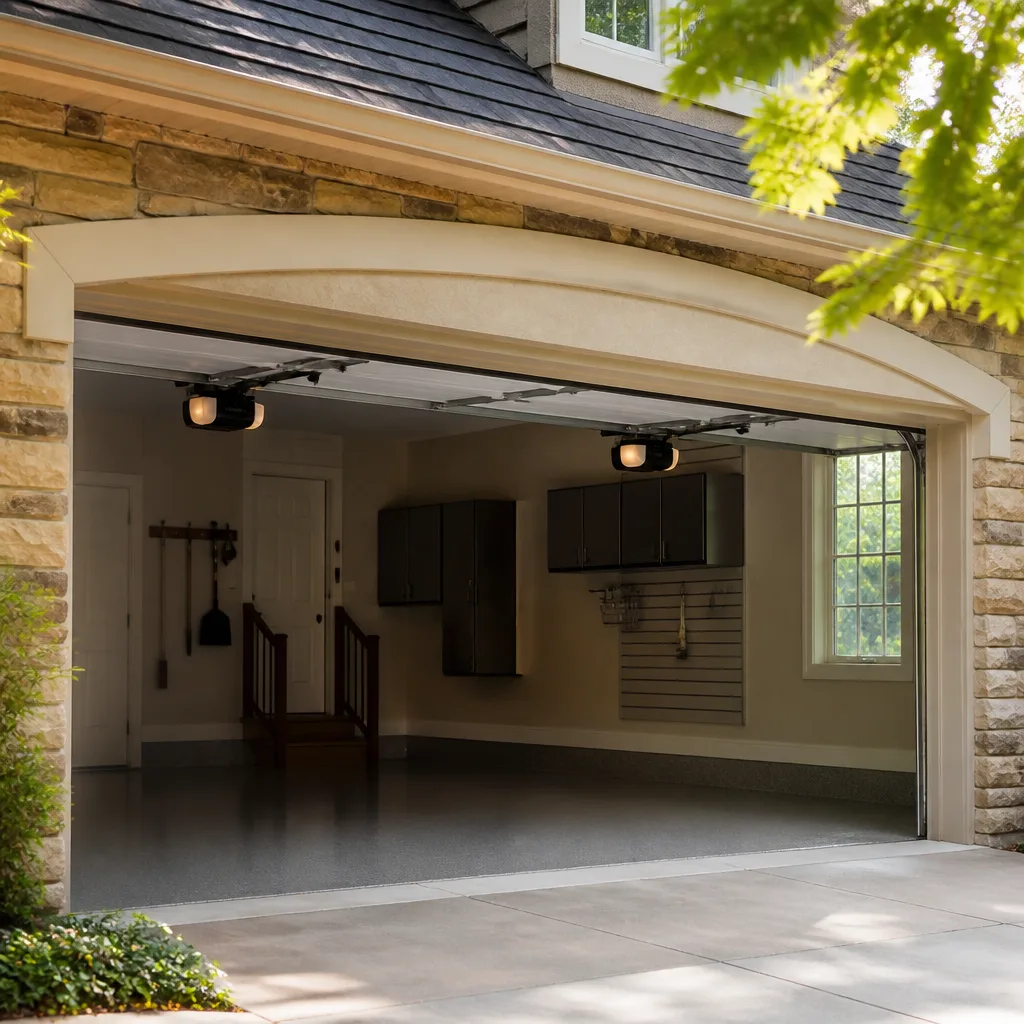 LiftMaster openers
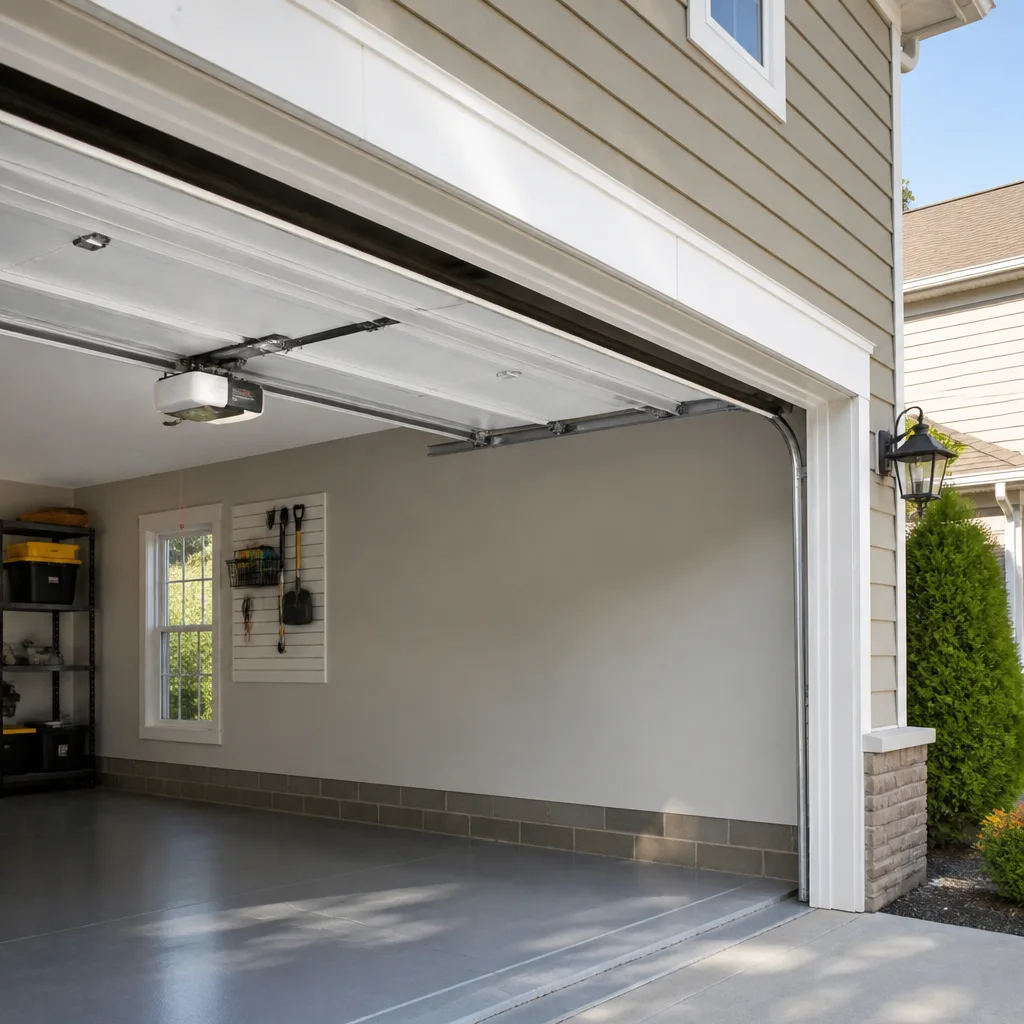 Chamberlain openers
Full 25-point door and opener safety check with every visit - springs, cables, rollers, tracks, and your LiftMaster or Chamberlain opener included
You get a price before we start. It does not change when the pro arrives.
Get your free estimateGarage Door Repair Troubleshooting in North Miami: Common Problems and How to Fix Them
A grinding noise isn’t always a gear problem, and a door that won’t close isn’t always a sensor problem. In our experience, that mismatch is where homeowners lose time and money: the symptom points one way, the actual mechanical failure sits somewhere else. A door that reverses at the floor usually gets blamed on the safety sensors, when a misaligned track or a binding roller is the real culprit. A loud opener gets blamed on the motor, when the door itself is out of balance and dragging. This guide maps each common symptom back to its root cause, tells you which checks you can safely run yourself, and shows you exactly where to stop before a job turns dangerous. We’ll cover the specific ways North Miami’s humidity and storm seasons create predictable failure patterns, and how to decide whether you’re dealing with an opener or the door hardware before anyone touches a wrench.
Quick Answer
Most garage door problems in North Miami come down to one of five root causes: a broken or fatigued spring, a door that’s gone out of balance, track misalignment from humidity and settling, worn rollers and hinges, or an opener that’s failing separately from the door. The fastest way to troubleshoot is to disconnect the opener and test the door by hand. If it’s heavy, binds, or slams, the problem is in the door hardware. If it moves freely and the opener still fails, the problem is in the opener. Anything involving spring tension or cables is a stop-and-call situation.
Styles & brands we work with
- Raised-panel steel
- Carriage house
- Modern flush
- Full-view glass
- LiftMaster openers
- Chamberlain openers
Table of Contents
- The Symptom-to-Cause Map: Reading Your Door Correctly
- Opener or Door Hardware? How to Tell Before You Call
- How North Miami Humidity and Storm Season Create Failure Windows
- DIY-Safe Checks vs. Stop-Immediately Jobs
- Spring and Cable Problems: Why You Stop at Visual Inspection
- Track, Roller, and Panel Problems You Can Often Reset
- Brand-Specific Quirks: LiftMaster, Wayne Dalton, Raynor, and Craftsman
- The Reset Checklist: What Technicians Charge a Trip Fee to Handle
The Symptom-to-Cause Map: Reading Your Door Correctly
Troubleshooting starts with listening. Every garage door failure announces itself before it strands your car, and the announcement is usually a specific sound or a specific hesitation. Here’s how we map the most common symptoms to the mechanical systems behind them.
What each symptom usually means
- A loud bang from the ceiling, then the door won’t lift. That’s almost always a torsion spring failing. The bang is the spring releasing stored tension. The door becomes too heavy to lift by hand, and an opener that tries will strain and strip its gears.
- A grinding noise that starts and stops. On a chain or belt opener, this is often worn gears in the opener housing, not the door. On the door itself, it’s usually a dry or seized roller or a hinge that’s lost its lubrication.
- The door reverses before it touches the floor. Safety sensors get blamed first, but a binding track or a door that’s out of balance will trigger the opener’s force limit and reverse the door just the same.
- The door lifts a few inches and stops. This is the opener’s force limit doing its job. The door is heavier than the opener is rated to lift, which points to spring fatigue or a broken spring.
- A door that closes crooked, with a gap on one side. One of the two cables has gone slack or the door has jumped a track. Both are cable-adjacent and warrant a professional look.
- The opener runs but nothing moves. The motor turns but the door doesn’t respond, which usually means a stripped gear, a broken drive belt, or a disconnected manual release.
The pattern to notice: three of those six symptoms get misdiagnosed as opener failures when the door hardware is the real problem. That’s the single most expensive misread in garage door troubleshooting in North Miami, because replacing an opener won’t fix a door that’s gone out of balance.
Opener or Door Hardware? How to Tell Before You Call
Before you call anyone, run one test. Pull the manual release cord, which disconnects the opener from the door, then lift the door by hand. That single move separates the two halves of the system.
Run the manual release test
- Close the door and pull the red release cord hanging from the opener rail. You’ll hear it disengage.
- Lift the door halfway by hand. A properly balanced door moves easily and stays put when you let go. A door that drops or won’t stay up has a spring or balance problem.
- Lower the door by hand and watch the tracks. If it binds, shudders, or needs two hands to guide it, the problem is in the door, the tracks, or the rollers.
- Reengage the opener and try the wall button. If the door now runs with the opener and not by hand, the opener is fine and the door hardware is the problem. If the door moves fine by hand but the opener fails, the opener is the source.
That test isn’t just a diagnostic; it’s what a technician runs first when they arrive. The difference is that we already know what a binding roller feels like versus a failing spring, so the diagnosis takes minutes instead of guesswork. If your door passes the manual test and the opener is a LiftMaster or Chamberlain, the next step is often a logic board or a force-limit setting issue rather than a mechanical one. You can read more about that side of the system on our garage door opener repair page.
How North Miami Humidity and Storm Season Create Failure Windows
Garage doors in North Miami live in a harder environment than the national average, and the failures follow a predictable calendar. Our humidity sits high through the summer months, and the storm season that follows loads the door and the tracks with wind pressure and debris. Knowing the cycle helps you catch a problem before it strands the car.
The humidity effect on tracks and rollers
Metal expands and contracts with heat and moisture, and steel tracks bolted to a concrete slab in a humid climate will shift over a season. It’s usually a few millimeters, but that’s enough to make a door bind or a roller ride out of its channel. This is why a door that worked last summer suddenly shudders in August. The door hasn’t changed; the track has moved relative to it.
The storm-prep effect on balance and safety
Every time a door is cycled more than usual during storm prep, the springs take the extra load. If a spring is near the end of its fatigue life, a week of heavy use can tip it. The storm season also brings wind-borne debris that dents panels, bends tracks, and pushes doors off their alignment. That’s why we see clusters of balance and track problems on either side of the rainy months.
Failure windows to watch
- Early summer: rollers and hinges dry out and start to squeal as humidity climbs.
- Peak storm season: track misalignment and panel damage from wind and debris.
- After the storms pass: springs that were near failure finally give out from the extra cycles.
- Year-round: opener components and logic boards failing from heat and moisture in the housing.
None of that is a reason to panic. It’s a reason to check the door by hand once a month, so you catch a humming track or a sagging door before the car gets stuck behind it.
DIY-Safe Checks vs. Stop-Immediately Jobs
Not all garage door trouble is created equal. Some of it you can absolutely reset yourself in five minutes. Some of it will put you in the hospital if you touch it. Here’s the line, and we don’t blur it.
Safe to check and reset yourself
- Clearing the photo-eye lenses at the base of the tracks and wiping dust off them.
- Cycling the door balance test by hand after releasing the opener.
- Lubricating hinges and rollers with a proper garage door lubricant.
- Retightening visible track bolts that have worked loose.
- Replacing a remote battery or reprogramming a remote.
- Checking the wall button and the manual release cord.
- Sweeping the debris away from the door seal after a storm.
Stop and call: never DIY these
- Anything touching a torsion spring, extension spring, or cable under tension.
- A door that has come off its track and is hanging crooked.
- A door whose bottom panel has detached or where the cables have gone slack.
- Noisy or binding operation that you can’t trace to a dry roller.
- An opener that reverses unpredictably or runs without a command.
Springs and cables hold enough stored energy to break a wrist or worse, and that’s true of a door in North Miami exactly as it’s true anywhere. The tune-up of a spring system isn’t a DIY job; the visual inspection of it is. That’s the limit, and we hold it on every call.
Spring and Cable Problems: Why You Stop at Visual Inspection
Springs are the most dangerous component in any garage door, and they account for a huge share of the emergency calls we handle. A torsion spring stores enough energy to lift hundreds of pounds of door, and when it fails, it releases all at once. Your only safe role is a look, not a touch.
What a visual inspection tells you
- Torsion springs: look along the spring at the top of the door. A clear break in the coil means the spring has failed. Look for a visible gap of an inch or more.
- Extension springs: look for a stretched, sagging, or visibly broken spring alongside the track. Check that the safety cables are still in place.
- Cables: look for a cable that’s gone slack, jumped its drum, or is frayed. A slack cable means the door is no longer level and something else is wrong.
- Balance: pull the manual release and see if the door stays up when lifted to halfway. A door that won’t stay up has weakened springs.
If everything looks intact and the door is balanced, the problem is somewhere else and you can keep diagnosing. If a spring is broken or a cable is slack, stop there. Adjusting spring tension with hand tools is a job for someone who’s trained for it, and the springs on every door are matched to that door’s weight and size. A mismatched replacement is nearly as dangerous as a broken one. Our garage door spring repair page covers the process, and it’s part of why we handle spring work as a core service rather than a specialty we farm out.
How spring replacement usually works
- We confirm the spring type, its measured wire size, and the door’s actual weight before quoting.
- The door is fully secured, and the old spring is unwound with the proper winding bars and control.
- The new spring is matched to the door and wound to the correct tension, then the balance is tested.
- We cycle the door several times and check the opener’s force limits are reset for the restored balance.
Track, Roller, and Panel Problems You Can Often Reset
Not every repair needs a technician. Tracks, rollers, hinges, and panels are the parts of the system where a homeowner can often fix the problem safely, and knowing how saves a call.
Track alignment
A track that’s been bumped or has crept out of alignment will make the door bind. Inspect the vertical tracks for visible bends or kinks. Minor loosening of the bolts that hold the track to the jamb can usually be corrected by snugging them back down, but a visibly bent section needs replacing, not bending back.
Rollers and hinges
A roller that’s seized or worn flat is a common source of grinding and shuddering. Look at the rollers along the track: they should sit evenly in the channel and turn freely. Hinges should be attached and free of rust. Dry hinges and rollers are the cause of most squealing, and a proper garage door lubricant (not household oil) fixes it.
Panel damage
Wind-blown debris and storm pressure can dent a panel or push it out of its hinges. A single dented panel can sometimes be replaced without changing the whole door, which is worth knowing before you assume the door is finished. If the bottom panel has separated and the door won’t close flat, that’s a job for a technician.
When a door’s damage is beyond a reset, you don’t need a second contractor. We handle garage door repair and installation as one company, so you’re not bouncing from a repair tech to a door installer.
Brand-Specific Quirks: LiftMaster, Wayne Dalton, Raynor, and Craftsman
Garage doors and openers aren’t interchangeable, and the brand on your system tells us a lot about where to look. We work on eight of the most widely installed brands: LiftMaster, Chamberlain, Genie, Clopay, Amarr, Wayne Dalton, Craftsman, and Raynor. Knowing the brand before the call shortens the diagnostic.
What brand knowledge changes
- LiftMaster and Chamberlain: these share a lot of platform DNA, so the logic board behavior and force-limit settings are familiar territory. Reversing and force-limit problems often trace to the opener’s travel settings rather than the door.
- Wayne Dalton: the company makes both doors and openers, and the door hardware has its own patterns. Track and roller alignment on a Wayne Dalton door follows a different sequence than a Clopay or Amarr door.
- Raynor: Raynor doors and openers have their own torque settings and limit-switch behavior, which matters when a door that works fine by hand still stumbles under the opener.
- Craftsman: older Craftsman openers are common in the area, and their remote and logic board quirks are familiar to us. Legacy systems get the same attention as modern ones.
If you don’t know your brand, look at the label on the door or the opener housing. That one detail is what we’d ask first anyway, and having it ready means the diagnosis can begin the moment a technician arrives. If your door’s service life is genuinely past saving, our North Miami Garage Door Repair service covers the full range from repair to a new door.
The Reset Checklist: What Technicians Charge a Trip Fee to Handle
Here’s the part most troubleshooting guides skip: several things you can check yourself take a technician ten minutes and often come with a trip charge. Running this checklist first can save you a visit.
Before you call anyone
- Test the door by hand with the opener released. Confirm whether the door is balanced or binding.
- Check the photo-eye sensors. Look for an LED light on each sensor, clear the lenses, and make sure nothing has slid into the beam at floor level.
- Try the wall button and a second remote. If one works and the other doesn’t, it’s a remote or receiver issue, not a door issue.
- Look at the track bolts. Snug any that have visibly worked loose. Don’t overtighten.
- Inspect the springs visually. Look for a break or a slack cable. Don’t adjust anything.
- Cycle the door and listen. Note whether the noise is from the opener housing or the door hardware.
- Check the opener’s force and travel settings. On most openers these can be reset from the control panel, and a force limit that’s tripped is a common cause of a door that stops mid-travel.
If the checklist clears and the door still misbehaves, that’s the point to call. We’ll pick up the diagnosis from there, and you’ll have skipped the part you can do yourself. Call (888) 923-0242. We answer 24/7. Fast dispatch from 7am to 7pm, Sunday through Friday.
Common Mistakes to Avoid
- Replacing the opener when the door is the problem. A door that’s out of balance or has a tired spring will strain any new opener you install. Test the door by hand first, every time.
- Bending a track back into place instead of replacing it. A bent track that’s been straightened will stay kinked and chew through rollers. A visibly kinked section needs a new one.
- Using household oil on hinges and rollers. WD-40 and cooking oil attract grit, which wears the parts faster in North Miami’s humid air. Use a proper garage door lubricant and reapply sparingly.
- Assuming a reversing door means a bad sensor. A binding track or a door that’s heavy on one side will trip the opener’s force limit and reverse the door just as reliably as a blocked beam.
- Touching a spring or cable to “just check it.” The visual inspection is safe; winding, loosening, or unhooking tension is not. Leave it.
- Ignoring a door that closes crooked. A gap on one side is a slack cable or a door off its track, and both get worse with use. Address it before it becomes a door that won’t close at all.
- Skipping the monthly cycle test until something breaks. A five-minute check of the door balance and the sensors catches most of these problems before they strand the car.
See the difference
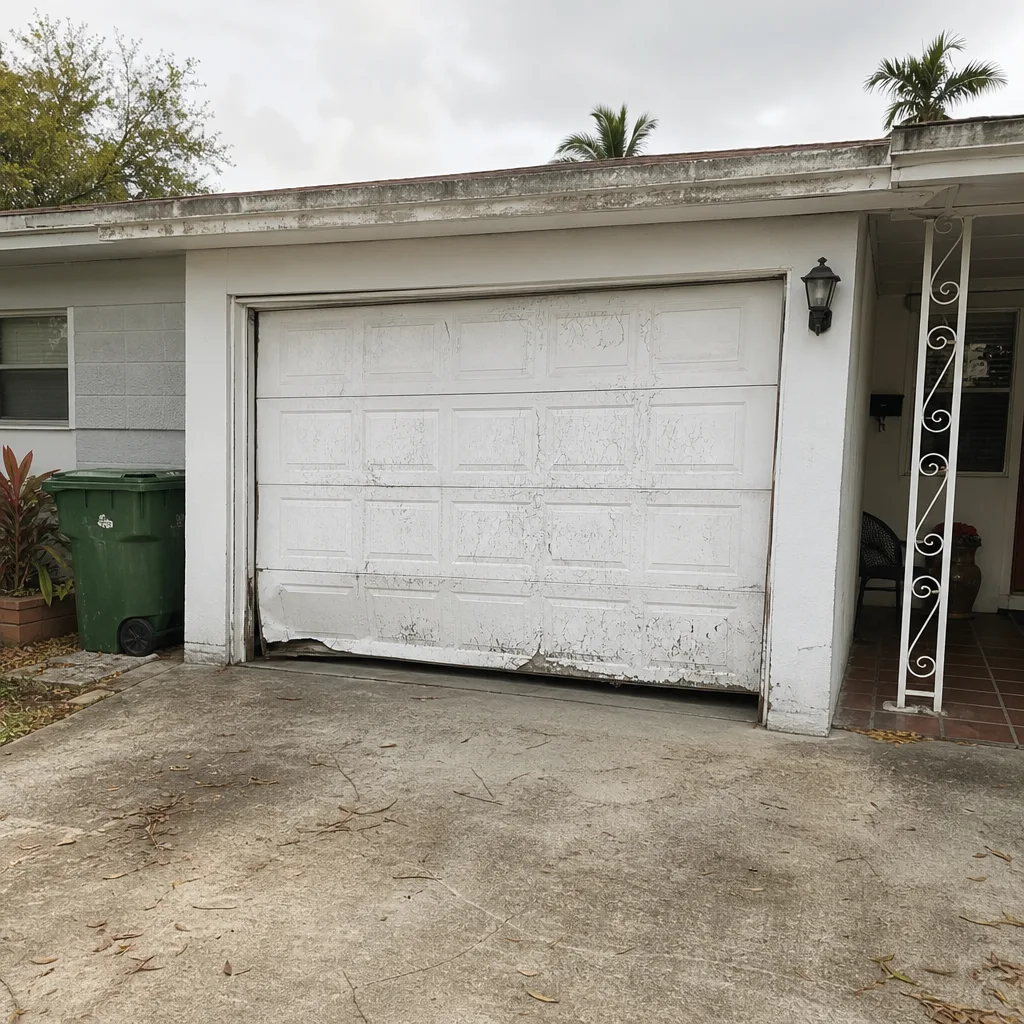 Before
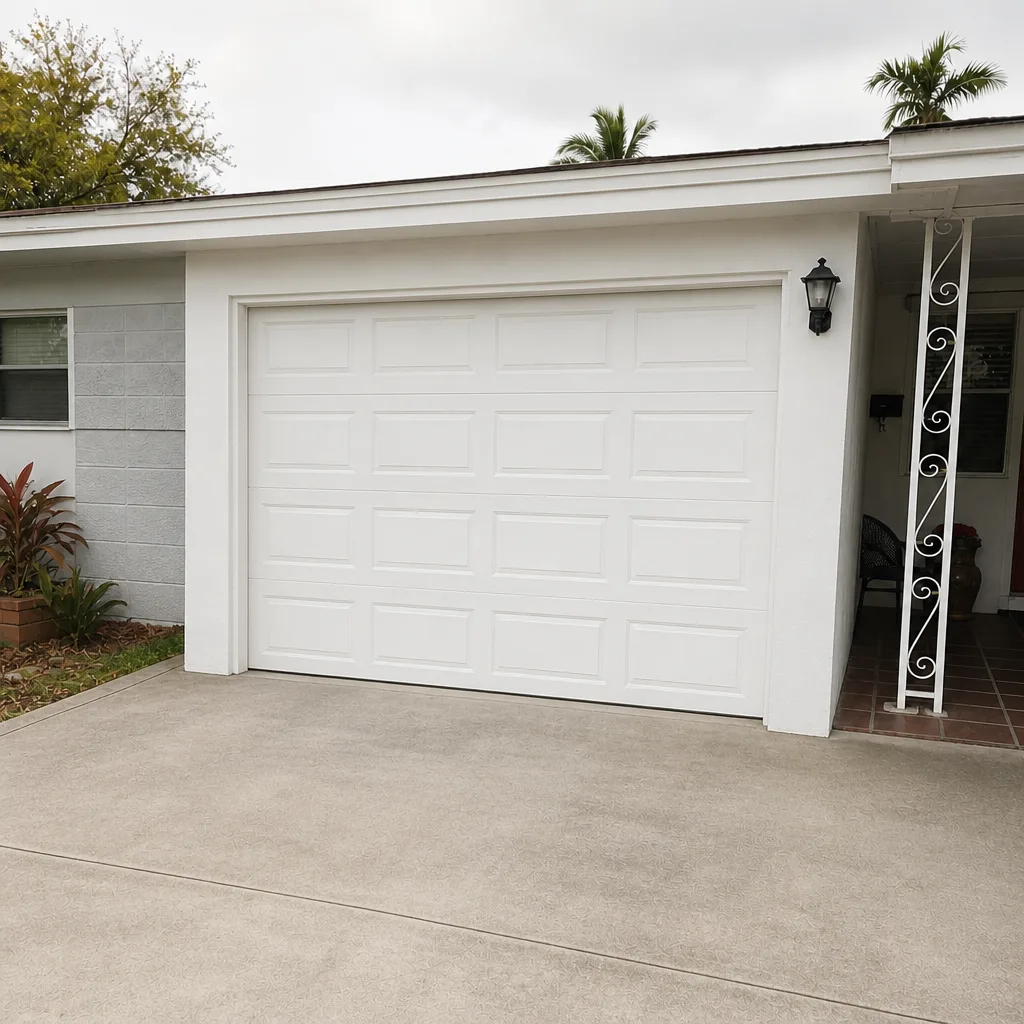 After
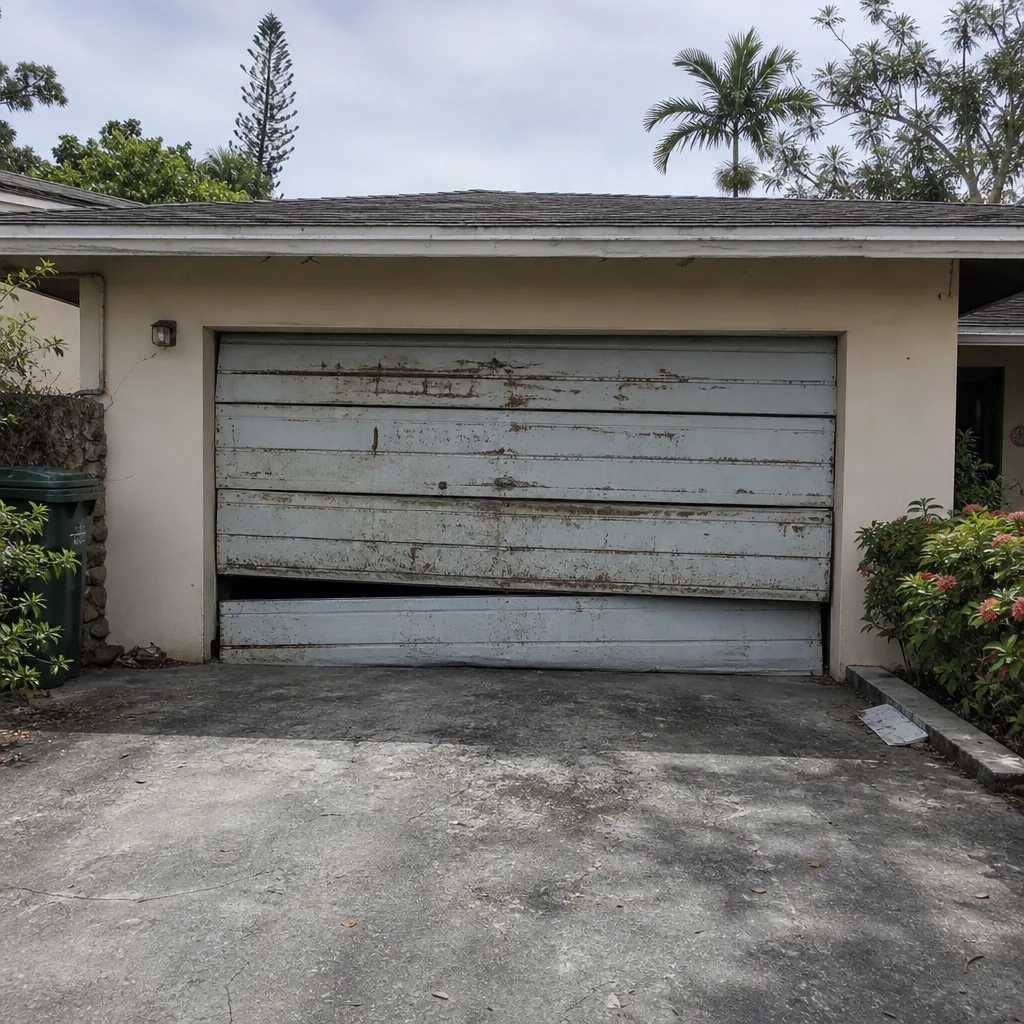 Before
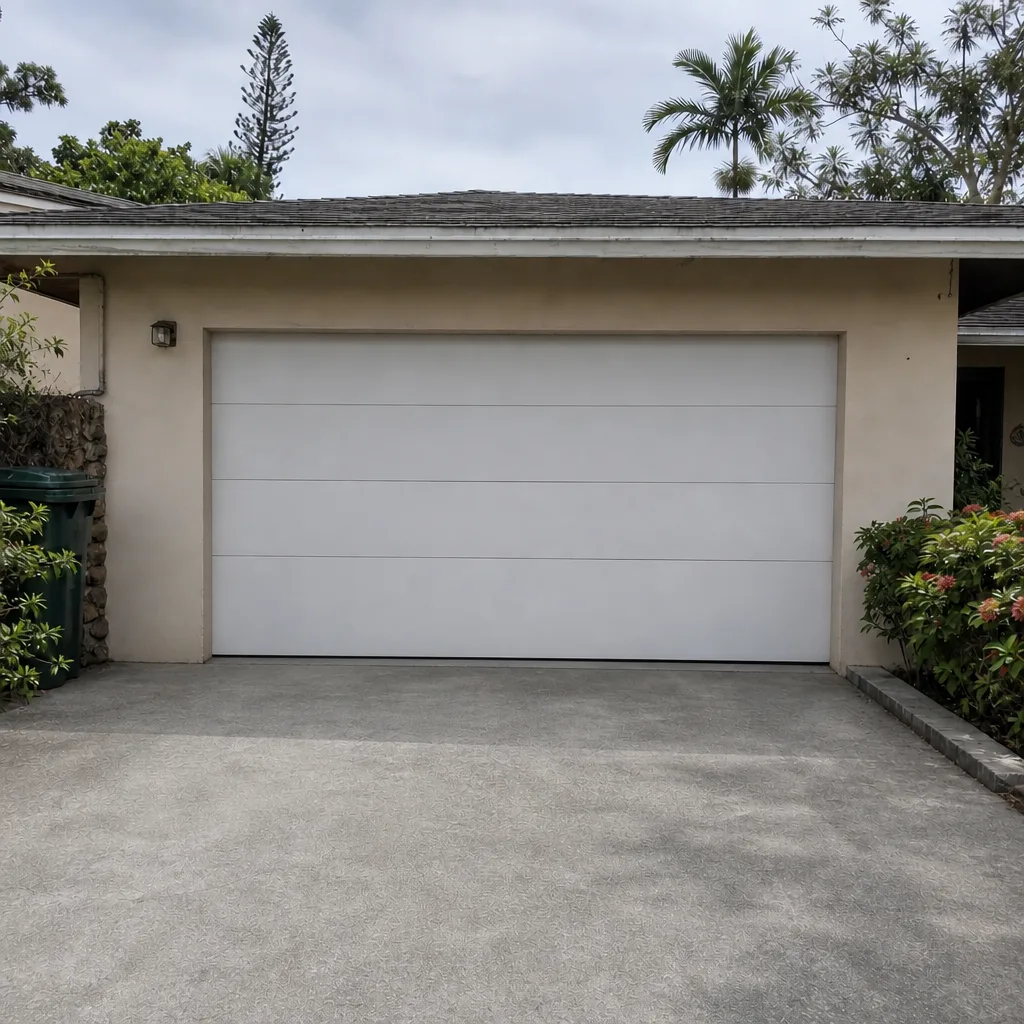 After
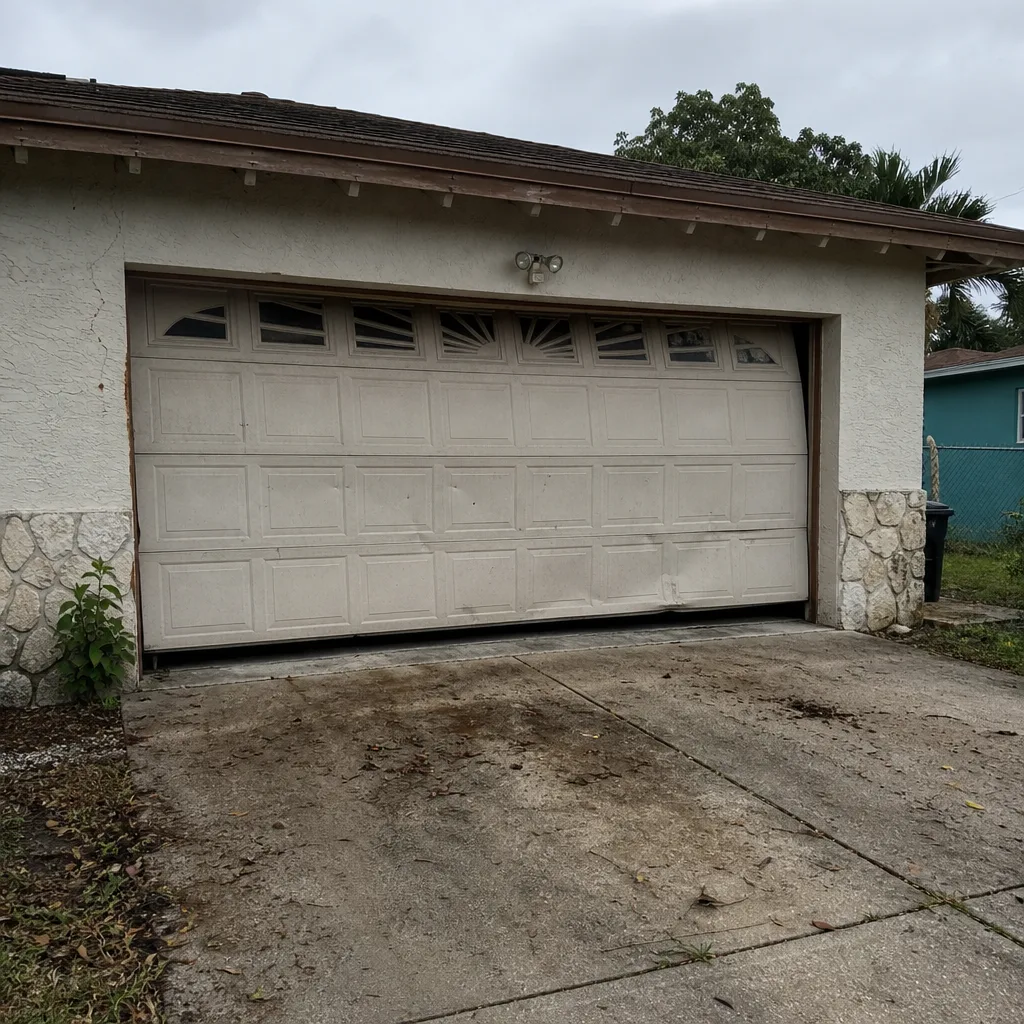 Before
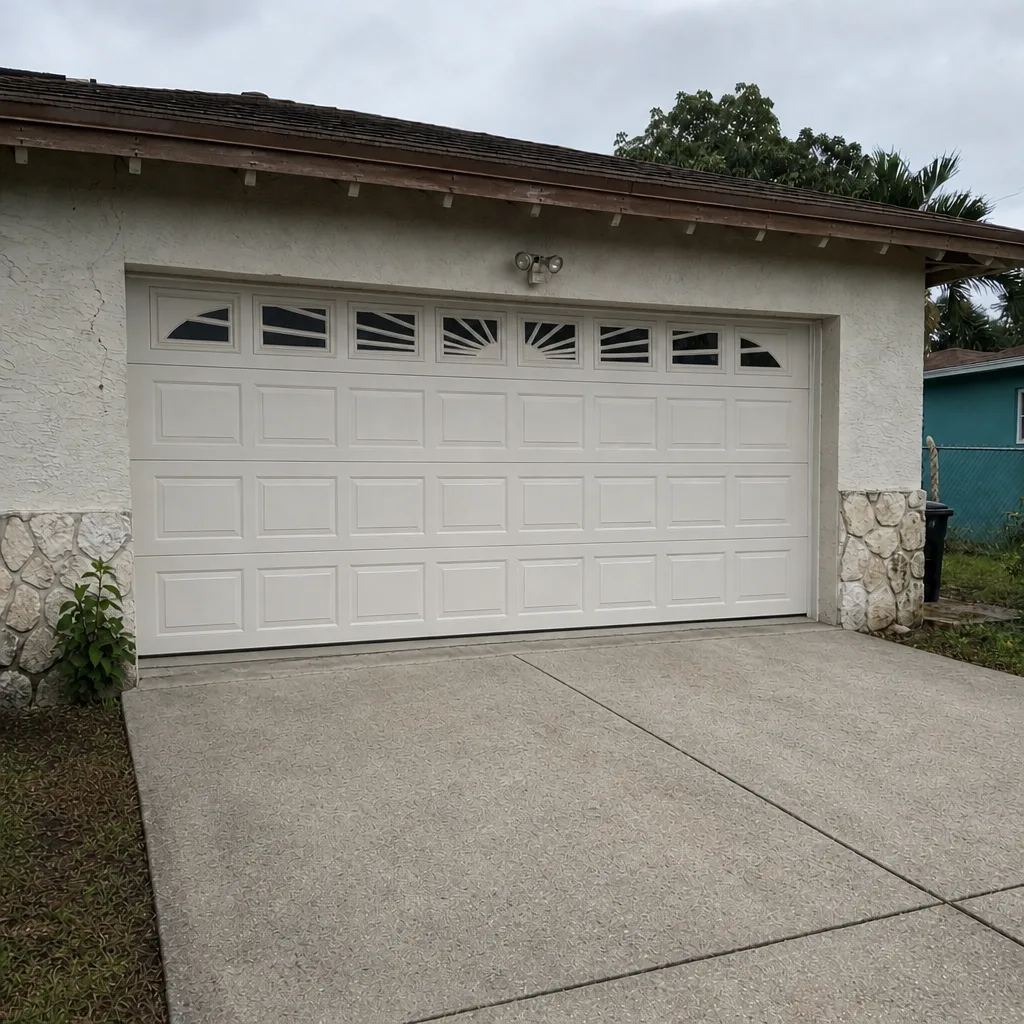 After
When to Call a Professional
Call us when you see a broken or stretched spring, a slack or frayed cable, a door that’s come off its track, or any symptom you can’t trace after the reset checklist. Call us also when the door closes crooked, when the opener runs but nothing moves, or when your car is blocked and you need the door back to working order quickly. We handle the full range: springs, openers, panels, and full door installations, all from one company. North Miami Garage Door Repair offers free estimates in North Miami. Call (888) 923-0242. We answer 24/7. Fast dispatch from 7am to 7pm, Sunday through Friday.
Frequently Asked Questions
Pull the manual release and test the door by hand. If it moves freely and the opener still won’t close it, the problem is usually the photo-eye sensors, a force-limit setting, or the opener itself. If the door binds or won’t stay up, the problem is in the door hardware, most often a tired spring or a misaligned track. Run that test before anything else, and call (888) 923-0242 if it points to hardware.
That’s almost always the opener’s force limit stopping a door that’s heavier than it should be. The usual cause is a weakened or broken spring, which leaves the opener to lift the full weight of the door. Fixing the opener won’t change anything; the spring or door balance is the real problem.
Spring repair in North Miami usually runs a few hundred dollars per spring, and a matched pair is typically replaced together, so expect the pair to cost roughly twice that. The written estimate sets the final price, and we quote it before any work starts. Call (888) 923-0242 for an exact quote.
No. Spring tension stores enough energy to cause serious injury, and a spring that’s wound or released incorrectly can fail violently. You can and should inspect the spring visually for a break, but the repair itself belongs with a trained technician.
North Miami’s humid summer air dries out and contaminates the rollers and hinges, and the track itself can shift as the metal expands. A proper garage door lubricant on the hinges and rollers usually quiets it, but if the noise persists after that, the cause may be a worn roller or a binding track.
Run the manual release test: pull the red cord, lift the door by hand, and see whether it moves easily and stays put. If it does, the opener is the likely source. If it doesn’t, the door is the source. That one test saves most homeowners an unnecessary call, and we’ll take it from there. Call (888) 923-0242.
The Bottom Line
Most garage door problems are solvable once you stop chasing the symptom and start reading the system. The bang, the grind, the hesitation at the floor: each one points to a specific mechanical cause, and once you’ve identified it, the right fix is obvious. In North Miami, humidity and storm seasons make certain failures predictable, so a monthly hand test and a look at the springs pay for themselves. The reset checklist handles the trips you can save, and the safety line keeps springs and cables off your DIY list. When you reach the stop point, we pick it up from there: springs, openers, panels, or a new door, all from one company. Our technicians have up to 9 years of experience, and we work with the brands you already have.
Call (888) 923-0242. We answer 24/7. Fast dispatch from 7am to 7pm, Sunday through Friday. Estimates are free, and the price is quoted and agreed before any work starts.
Written by the team at North Miami Garage Door Repair.