
Last updated November 23, 2026
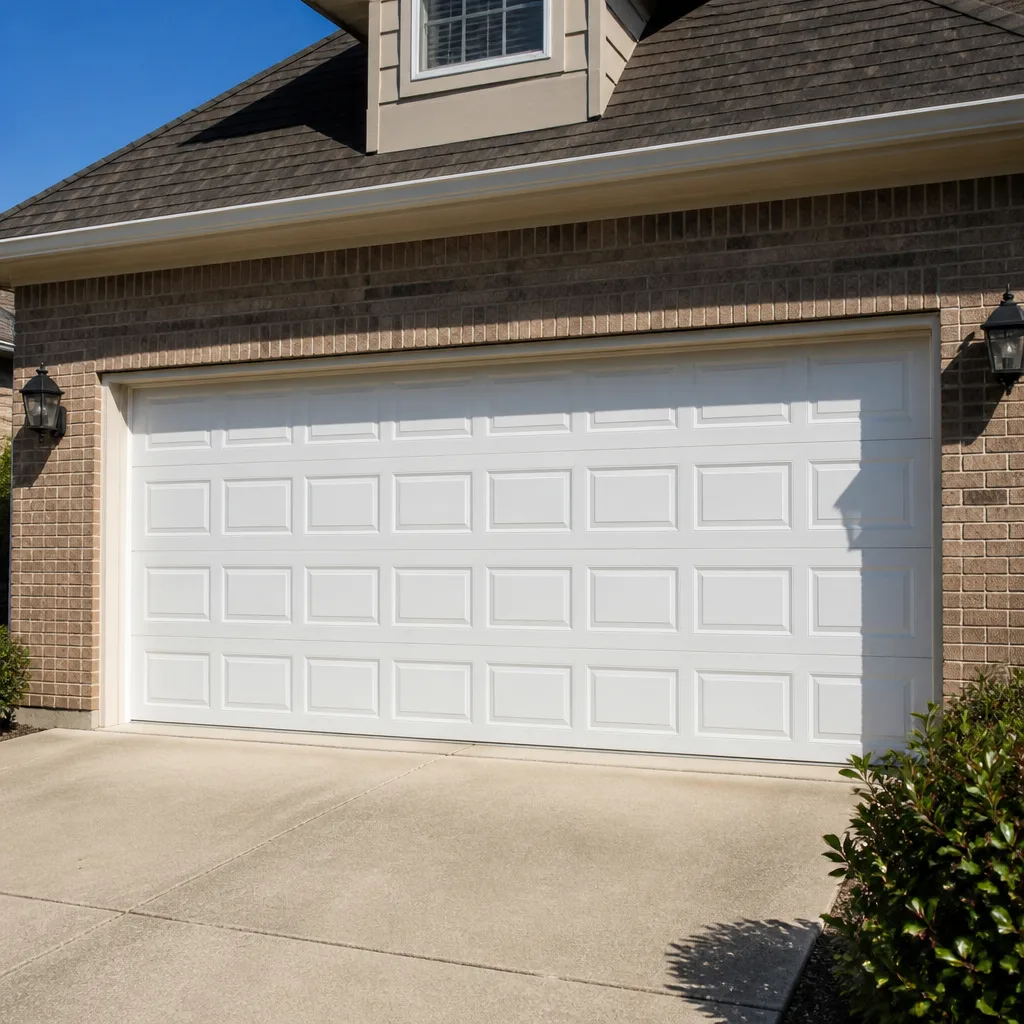 Raised-panel steel
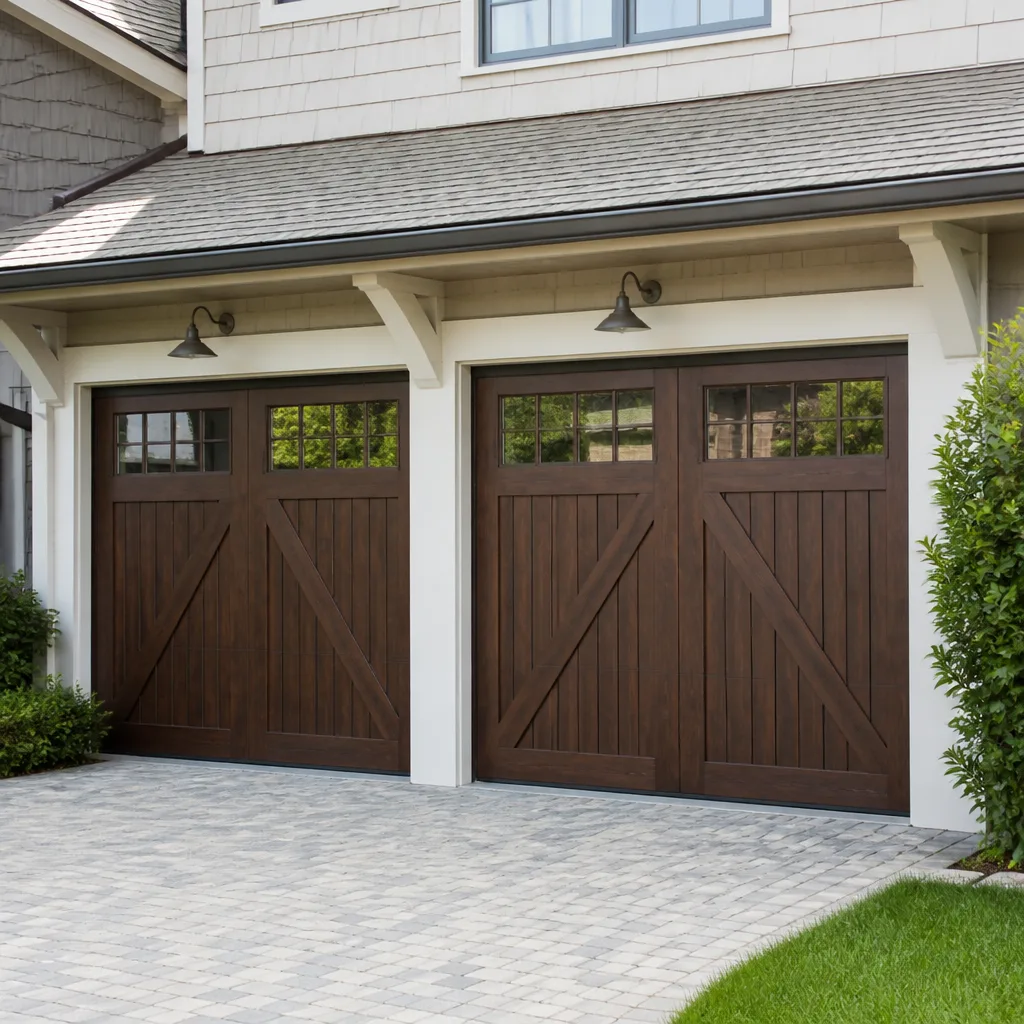 Carriage house
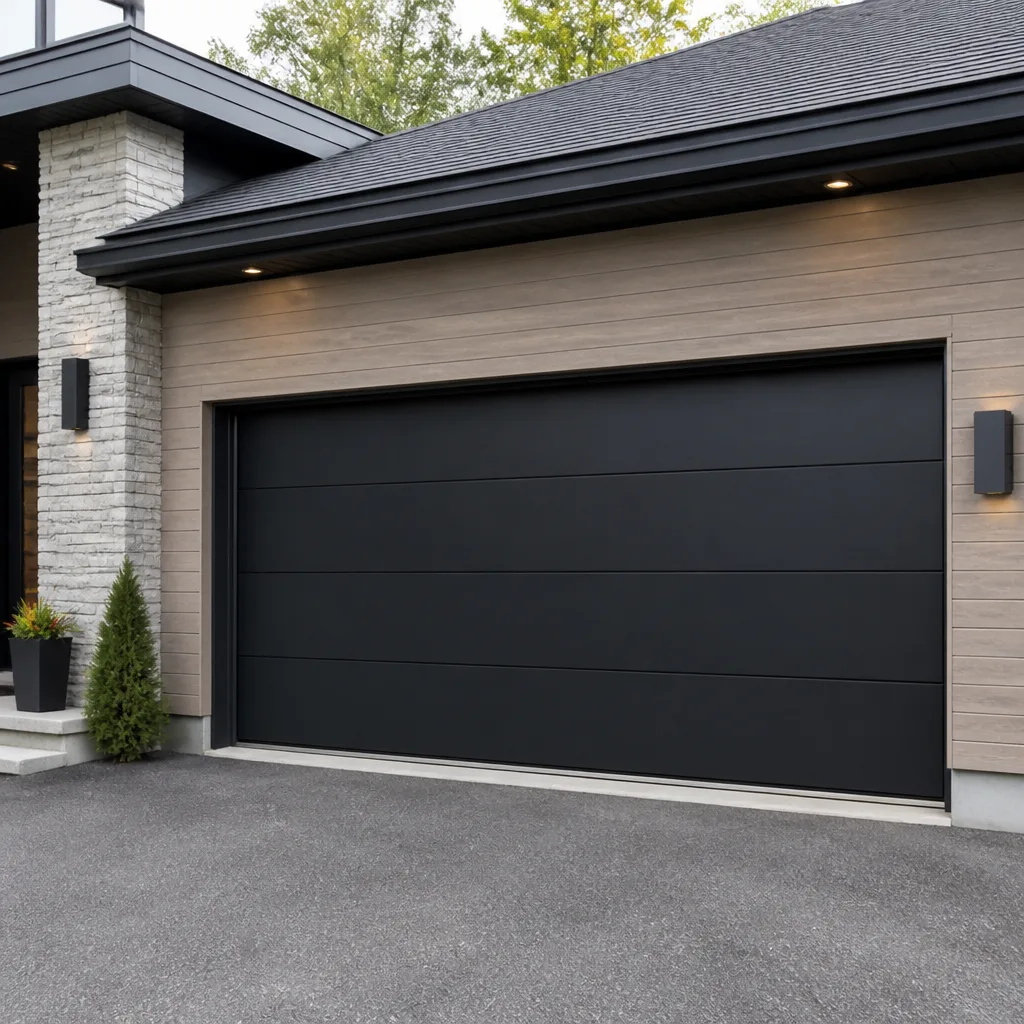 Modern flush
 Full-view glass
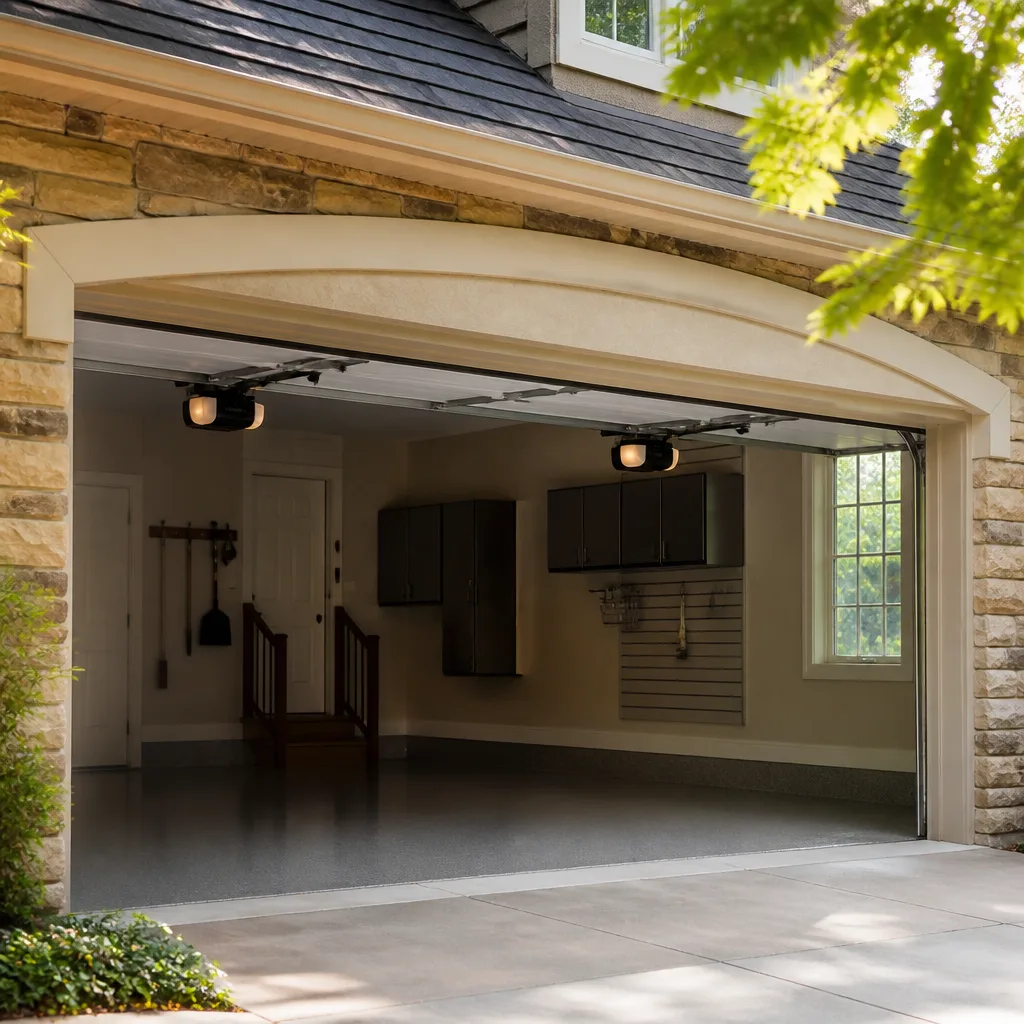 LiftMaster openers
 Chamberlain openers
Full 25-point door and opener safety check with every visit - springs, cables, rollers, tracks, and your LiftMaster or Chamberlain opener included
You get a price before we start. It does not change when the pro arrives.
Get your free estimateGarage Door Warning Signs: A North Miami Homeowner’s Reference Guide
A garage door that takes two seconds longer to open than it did last month isn’t aging normally. It’s a spring under reduced tension, and when it finally goes, it goes under full load. That’s the part most homeowners miss: the loudest failures are rarely the sudden ones. They announce themselves weeks ahead with small sounds, small hesitations, small streaks of rust that nobody connects to the mechanism overhead. This guide gives you a working diagnostic framework so you can tell a cosmetic quirk from a part that’s one cycle away from leaving you locked out. We’ll cover what each sound means, what South Florida humidity does to the hardware, and when a door crosses from “watch it” to “legal hazard.”
Quick Answer
The main warning signs of a failing garage door in North Miami are unusual sounds (grinding, squealing, popping, rattling), a door that lifts unevenly or jerks, rust streaks or white corrosion around the spring mounts and cable ends, an opener that runs longer than it used to or reverses mid-cycle, and a door that fails the safety reversal test. Any two of these together usually means a component is worn past its service life. A door that won’t reverse when it meets an obstruction is the one you shouldn’t wait on.
Styles & brands we work with
- Raised-panel steel
- Carriage house
- Modern flush
- Full-view glass
- LiftMaster openers
- Chamberlain openers
Table of Contents
- Sound-Based Diagnosis: What Each Noise Tells You
- Visual Signs Specific to South Florida Homes
- Movement Abnormalities and What They Reveal
- Opener Behavior as a Diagnostic Signal
- The Safety Reversal Test and What a Failure Means
- Springs and Cables: The Two Parts You Never Touch
- A Simple Triage: Repair, Replace, or Watch It?
- Common Mistakes to Avoid
Sound-Based Diagnosis: What Each Noise Tells You
Sound is the earliest signal you get, and it’s the most specific. A garage door in good order produces one consistent hum and a soft roll. When that changes, the change points at a component. Here’s how we read the four noises we hear most in North Miami:
- Grinding. Metal-on-metal contact. Usually a worn roller, a dry hinge, or a torsion tube binding in its bearing plate. Grinding that gets louder near the top of travel points to the bearings; grinding that follows the door along the track points to rollers.
- Squealing. Typically a dry or failing roller stem, or a nylon roller that has worn through to the steel shaft. It’s high-pitched and rhythmic, timed to the door’s movement.
- Popping. This is the one to take seriously. A single sharp pop, especially when the door is under load, can be a spring winding down or a cable slipping off a drum. Popping from the track area usually means a hinge has pulled loose from the panel.
- Rattling. Loose hardware: hinge bolts backing out, track brackets vibrating, panel fasteners loosened by the constant vibration of a door cycling several times a day. Rattling is rarely urgent, but it accelerates wear on everything around it.
The useful habit is to stand in the garage and listen to one full cycle. You’re not diagnosing the part. You’re noticing whether the sound is consistent or whether it appears at one specific point in travel. A noise that only happens at one position localizes the fault far faster than a noise that runs the whole cycle. In our experience, that single detail saves a lot of diagnostic time on a North Miami service call, whether the door is an Amarr steel model or an older Wayne Dalton that’s been cycling for years.
Visual Signs Specific to South Florida Homes
South Florida’s humidity does things to garage door hardware that you won’t read about in a manufacturer’s generic maintenance guide. The air here holds moisture most of the year, and every steel component in the door system lives in that moisture. What that produces on a North Miami door is a specific set of visual clues:
- Rust streaking from spring mounts. Vertical brown trails running down the wall or the door panel from where the torsion spring anchors to the header. That’s not a paint problem. It’s moisture working on the anchor plate and the spring coils, and it means the spring is losing metal to corrosion.
- Salt-white corrosion on cable ends and fittings. A chalky white film where the cable terminates, or on the drum and clevis fittings. That’s galvanic corrosion, and a corroded cable end can slip or snap without warning.
- Track separation at corner joints. Wood and metal both move with humidity, and a header that swells and shrinks seasonally can pull the track brackets out of alignment. Look for a visible gap or a track that no longer runs parallel to the door edge.
- Panel warping or bubbling. Humid air trapped behind a panel finish causes bubbling and eventual delamination, most often on wood-composite and steel-panel doors.
- Rust bloom on the bottom section. The lowest panel sits closest to the ground and the splash zone, and it’s the first to go. Check the bottom seal and the panel’s bottom edge together.
None of these are cosmetic. Each one is a component telling you it’s degrading. Rust streaks and cable corrosion in particular are the pair we see on North Miami doors that are closer to failure than the homeowner believes. If you see either, get the door looked at before it decides the timing for you.
Movement Abnormalities and What They Reveal
How a door moves tells you almost as much as how it sounds. Watch one full open-and-close cycle and you’ll catch the early mechanical errors:
- Uneven lift. One side of the door rises before the other, or the door angles slightly as it climbs. This usually means a cable is stretching, a drum is binding, or the two torsion springs on a paired system are no longer matched in tension.
- Hesitation. A pause at a specific point in travel, as though the door has to think about it. That’s friction or a binding track at that exact position, not a motor problem, even though it feels like one.
- Jerky travel. The door moves in stutters rather than a smooth glide. Worn rollers, a dry or bent track, or a misaligned opener rail will all produce this.
- Reversing before it closes. The door starts down and goes back up without an obstruction present. That’s the safety system firing on a false signal: a misaligned photo-eye, a dirty lens, or a logic board that needs replacement.
- Slamming or dropping fast on the last few inches. Loss of spring tension on the closing side, which puts the whole door’s weight on the opener and the bottom seal.
Uneven lift and slamming are the two we treat as time-sensitive, because both load parts that weren’t designed to carry the door’s weight alone. A hesitation or a stutter can often wait for a scheduled visit. A door that drops on close is a call we’d make the same day. If the door is also failing to reverse, that moves it into hazard territory, which is the next section.
Opener Behavior as a Diagnostic Signal
The opener is the most misunderstood part of the system, because it doesn’t lift the door. It assists. The springs carry the weight, and the opener adds the directional push. When the opener starts behaving strangely, it’s often reporting on something else. Read it as a messenger, not a culprit.
- Motor running longer than normal. The opener is working harder to complete the same travel. Nine times out of ten the cause is a spring that’s lost tension, not a dying motor. Replacing the opener in that case fixes nothing and shortens the life of the new unit.
- Remote range shrinking. The door only responds when you’re close to the house. On older units this is usually a worn receiver or a battery going, but on newer smart openers it can also be interference. LiftMaster and Chamberlain units, which we work on frequently, handle range issues differently depending on their logic board generation.
- Door reversing mid-cycle. Covered above for the safety system, but on a smart opener it can also be a firmware or travel-limit setting that’s drifted. These need to be reset and re-tested, not ignored.
- Lights flashing in a pattern. Most openers flash a diagnostic code when a cycle fails. Counting the flashes and checking the brand’s code chart tells you whether it’s a safety-sensor fault, a travel-limit fault, or a motor fault. That single step turns a mystery into a repair.
- Clicking but not moving. The motor’s trying and the mechanical linkage isn’t responding. Often a stripped gear or a broken trolley, and the door stays put until it’s fixed.
If your opener is doing any of these, the useful question isn’t “which opener do I buy?” It’s “what is the opener reacting to?” A proper diagnosis on a North Miami door starts at the springs and tracks, then moves to the opener. That order matters.
The Safety Reversal Test and What a Failure Means
This is the one test every homeowner should run monthly, and it takes under a minute. The safety reversal function is the door’s built-in defense against crushing a person, pet, or object under a closing door. In the US, garage door openers are required to have an automatic reversal function, and the Consumer Product Safety Commission has treated a non-functioning reversal as a genuine injury hazard. A door that fails this test isn’t a maintenance item. It’s a legal and physical hazard until it’s fixed.
How to run the test:
- Stand clear of the door’s path and close it fully with the wall control or remote.
- Place a sturdy object about the height of a roll of paper towels (roughly 1.5 inches tall) flat on the floor in the center of the doorway.
- Press the button to close the door and watch the moment the door’s bottom edge meets the object.
- The door should reverse and go back up immediately. If it stops but doesn’t reverse, or continues down, the safety function has failed.
- Repeat the test with the photo-eye system by standing in the door’s path and watching that the door reverses when the beam is broken. The photo-eye lenses should be roughly six inches off the floor and aligned with each other.
What a failure means: a door that won’t reverse on contact has lost one of its primary safety systems. It could be a misaligned photo-eye, a dirty lens, a faulty logic board, or a mechanical binding that overrides the reversal. None of those are fixable by adjusting the force setting, which is the most common and most dangerous mistake homeowners make. The fix is a proper diagnosis, and until it’s done, the door should be operated only with someone watching it.
We run this test on every diagnostic visit in North Miami, because a door that fails it changes the whole job from “repair” to “make this safe before anything else.” If yours fails, that’s the call to make.
Springs and Cables: The Two Parts You Never Touch
Every warning sign we’ve covered eventually traces back to the spring or cable system, because that’s where the door’s weight lives. A torsion spring stores enough energy to lift a door that weighs hundreds of pounds. When it releases that energy, it does so instantly. A snapped spring sounds like a gunshot and sends metal across the garage. A snapped cable whips.
This is the part of the system where we draw a hard line on DIY. We don’t give step-by-step instructions for spring or cable work, because the risk of serious injury is real and the alternative is straightforward: a trained professional with the right winding bars, the right technique, and the knowledge to make the repair safe. Winding a torsion spring on your own, or trying to replace a cable without knowing the correct drum wrap, can end in a hospital visit. The spring work is the most mechanically dangerous and skill-sensitive part of the trade, and it’s a named core service for us for exactly that reason. Our technicians have up to 9 years of experience, and the training to do spring and cable work safely is a big part of what that experience represents.
A spring that’s losing tension, a cable with a frayed strand, or a drum that’s slipping are all signs that the system is in its failure window. Visible rust streaking, white corrosion at the cable ends, uneven lift, and a pop you heard once and hoped you imagined all point at the same subsystem. If two of those are true on your door, the right move is a professional diagnosis, not a hardware-store part and a Saturday afternoon.
A Simple Triage: Repair, Replace, or Watch It?
Not every warning sign means the same thing, and treating them all as urgent wastes money. Treating the wrong ones as cosmetic costs more. Here’s how we sort them:
| Sign | Category | What to do |
|---|---|---|
| Squealing or grinding | Watch it | Lubricate rollers and hinges; schedule a service visit if it persists or worsens |
| Rattling or loose hardware | Watch it | Tighten what you can see; a technician should check track brackets and panel fasteners |
| Uneven lift or hesitation | Repair soon | Book a diagnostic; cable or drum issue is likely |
| Opener running long | Repair soon | Spring tension check; don’t replace the opener until the spring is ruled out |
| Pop sound, jerk under load | Repair now | Stop operating the door; call for same-day service |
| Door drops fast on close | Repair now | Stop operating the door; same-day call |
| Fails safety reversal test | Hazard | Do not operate without someone watching; call immediately |
| Spring visibly snapped or cable hanging | Hazard | Keep everyone clear of the door; call for emergency service |
The “watch it” items are the ones most North Miami homeowners treat as background noise, and they’re the ones that turn into “repair now” if left too long. A grinding roller becomes a worn hinge. A worn hinge becomes a loose panel. A loose panel becomes a door that hangs crooked. The cheap fix today is expensive later. If you’re unsure which category your door is in, describe the sound and the movement over the phone and we’ll tell you whether it’s a scheduled visit or a same-day one.
Common Mistakes to Avoid
- Increasing the opener’s force setting to “fix” a heavy door. This doesn’t repair anything. It forces the opener to lift a door the springs should carry, burns out the motor faster, and defeats the safety reversal system. A heavy door is a spring problem, not a force-setting problem.
- Replacing the opener when the spring is the real fault. A new opener on tired springs will fail faster than the old one did. Diagnose the mechanical system first, then talk about the opener.
- Spraying the tracks with lubricant without cleaning them. Lubricant on top of grit creates a sticky paste that attracts dust and grime. In North Miami’s humid air it also holds moisture against the track. Clean the tracks first, then use the right lubricant on the right parts.
- Ignoring rust streaks because the door still opens. The door still opening is not the same as the spring still being sound. Rust on a spring is metal going away, and the spring’s ability to hold its tension goes with it.
- Replacing one spring of a matched pair. Torsion springs on a paired door are matched in tension. Replacing one leaves the door imbalanced, and the newer spring quickly gets overworked by the older one. Matched pairs are replaced together, which is why a pair typically costs about twice a single spring.
- Touching the spring or cable hardware. This is the one mistake that can put you in the hospital. Springs and cables are the parts to leave to a trained technician. Diagnosing is fine. Winding, replacing, or re-tensioning is not.
- Running a door that failed the safety reversal test because “it usually works.” Usually working is the definition of a safety system that’s about to fail at the wrong moment. If it fails once, it needs repair before it’s used again.
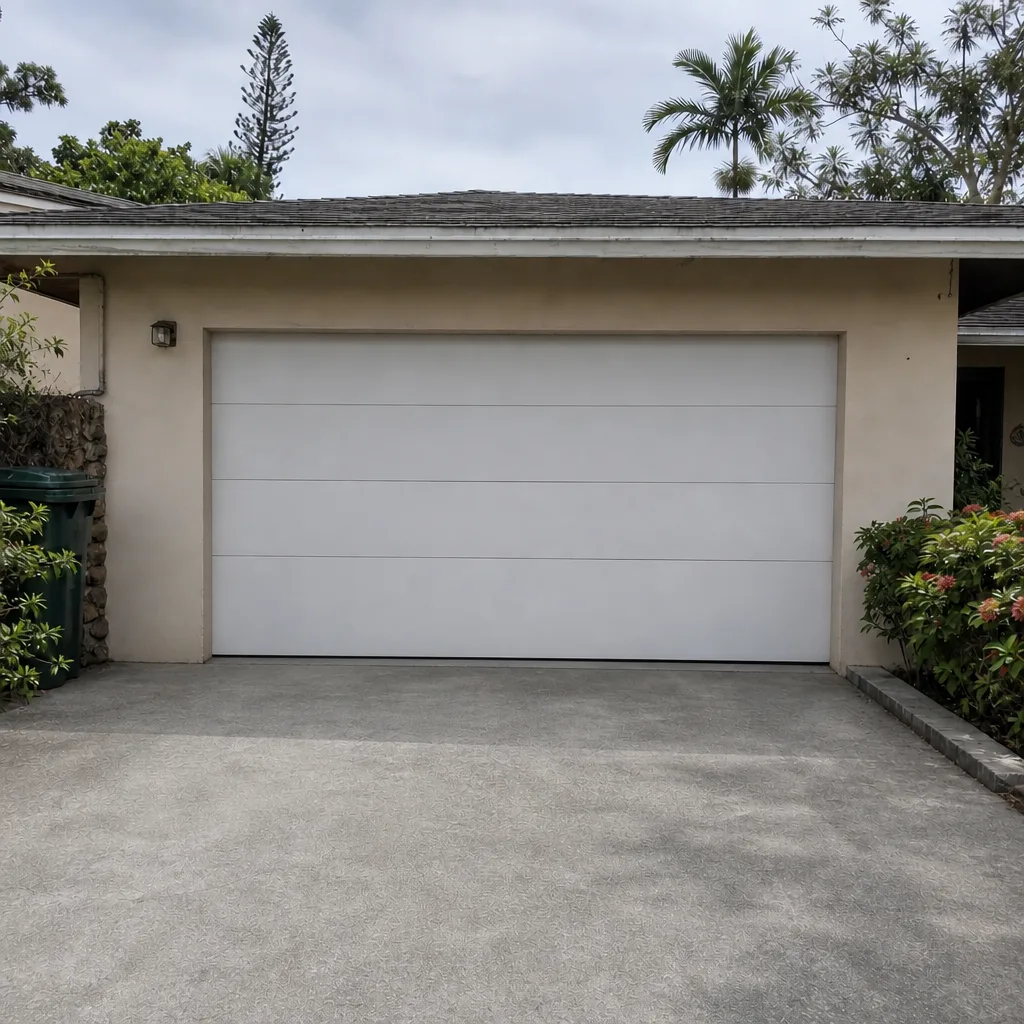
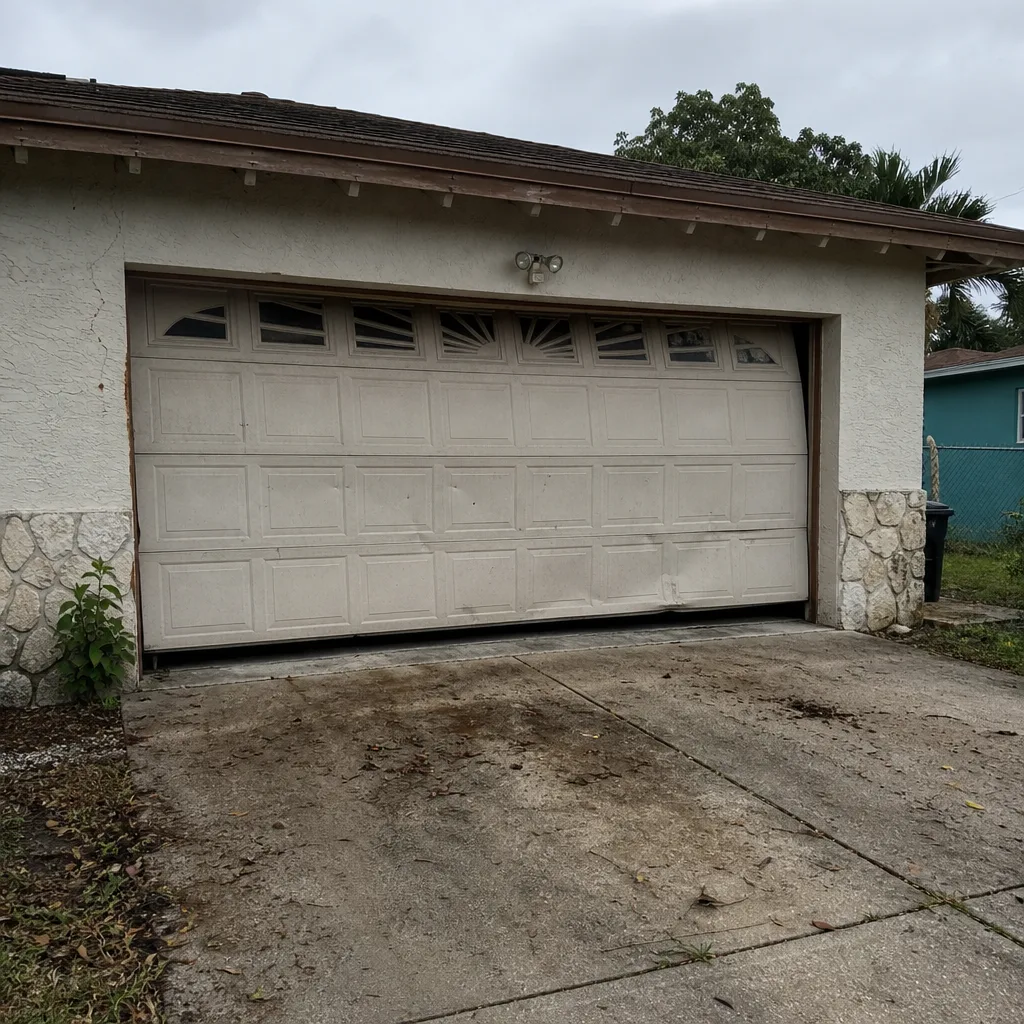
See the difference
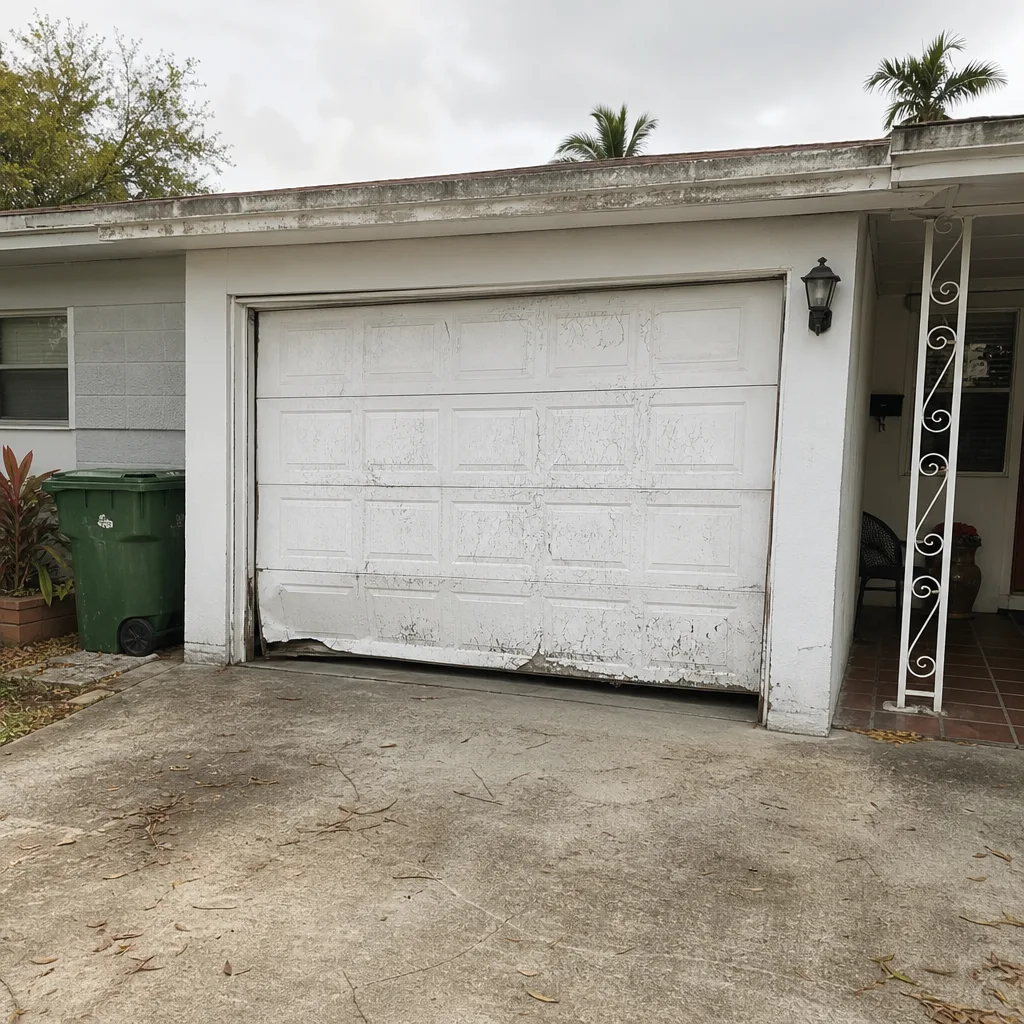 Before
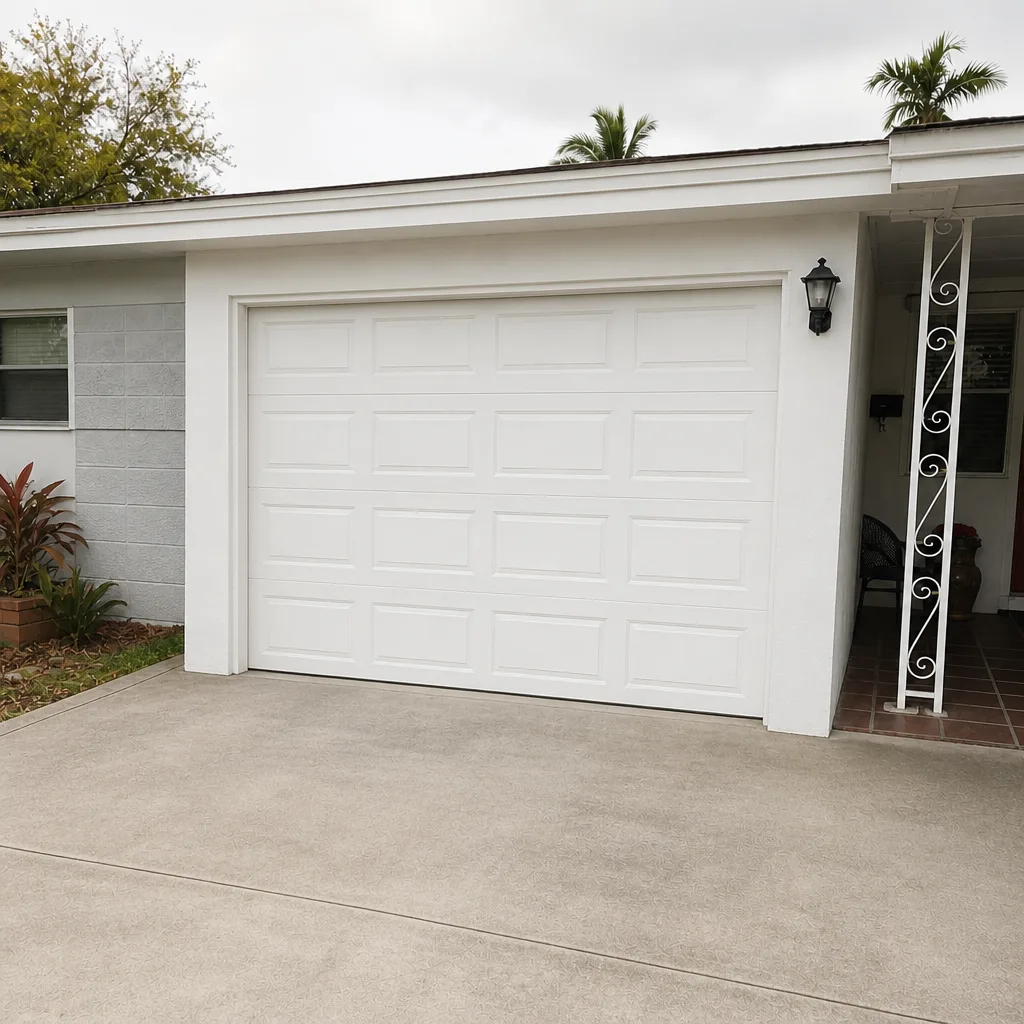 After
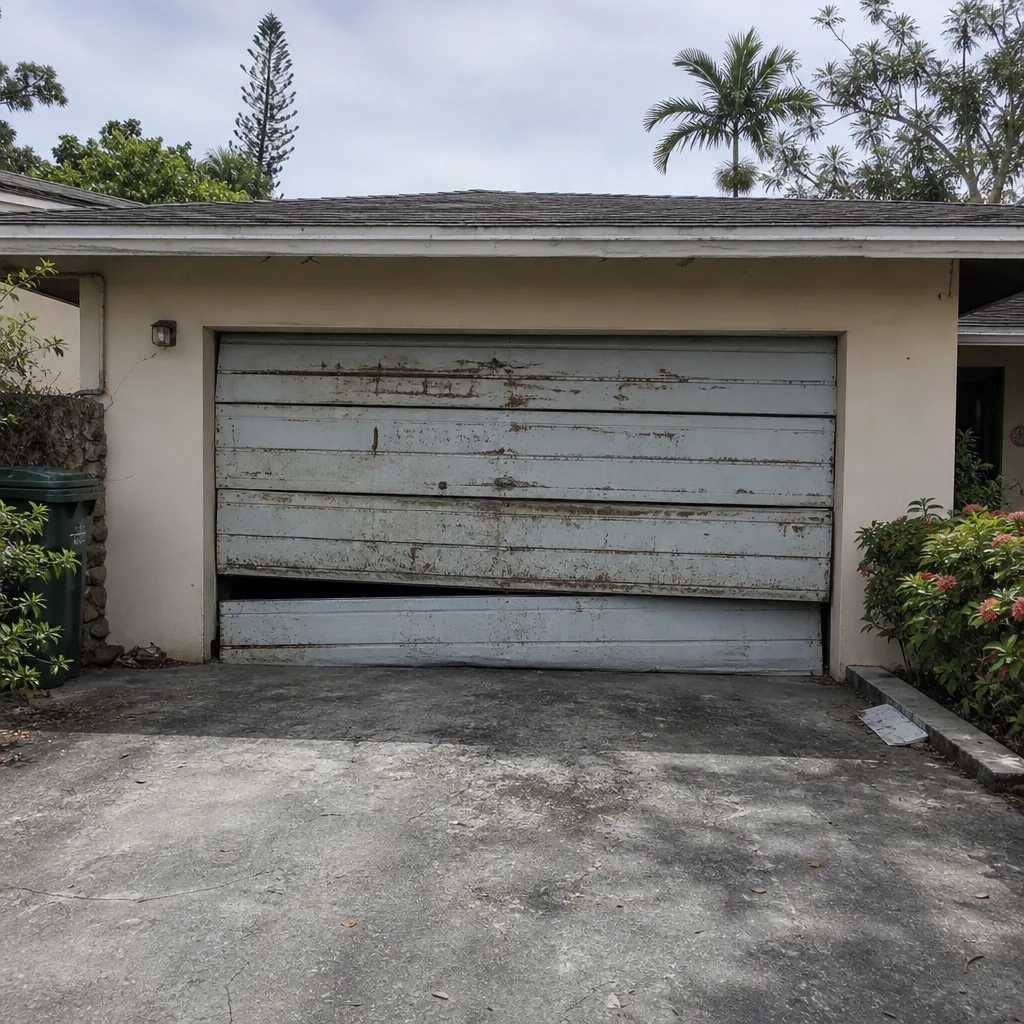 Before
 After
 Before
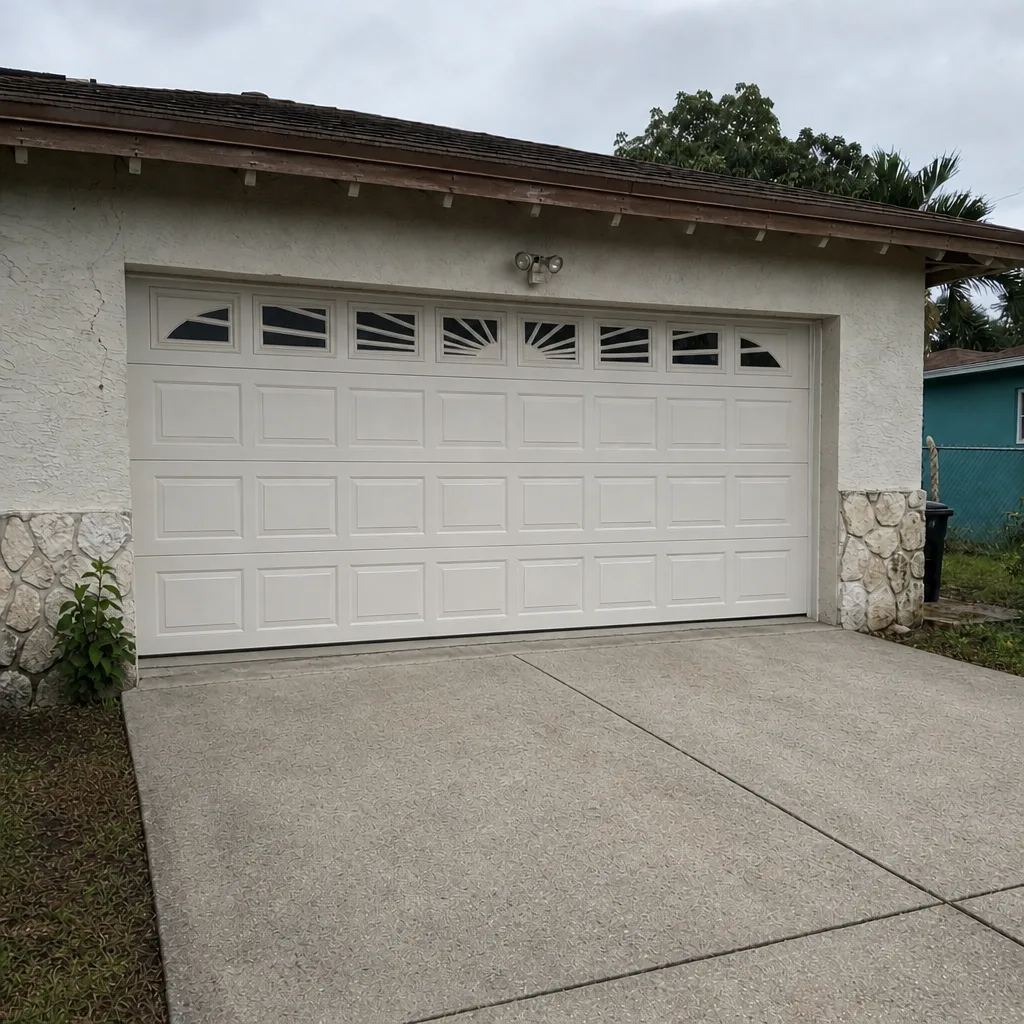 After
When to Call a Professional
Call for a professional diagnosis when the door fails the safety reversal test, when a spring has visibly snapped or a cable is hanging, when the door drops fast on close, or when you’ve found two or more warning signs in the same section of this guide. Call sooner if the door won’t open at all or if it’s blocking a car or a business entrance, since an emergency call is a named core service for us and not an upsell. Our technicians work on LiftMaster, Chamberlain, Genie, Clopay, Amarr, Wayne Dalton, Craftsman, and Raynor systems, so we’re likely familiar with whatever is installed on your door. North Miami Garage Door Repair offers free estimates in North Miami. Call (888) 923-0242. We answer 24/7. Fast dispatch from 7am to 7pm, Sunday through Friday.
Frequently Asked Questions
The most serious warning sign is a door that fails the safety reversal test. It means the door could crush a person, pet, or object under a closing door, and it’s a hazard until repaired. Call (888) 923-0242 for a diagnosis. Estimates are free. We answer 24/7, with fast dispatch from 7am to 7pm, Sunday through Friday.
Most garage door repairs in North Miami fall in the range of a single service call. A basic adjustment, roller or hinge replacement, or track realignment typically runs $120 – $250. Spring repairs run higher, roughly $180 – $340 for one spring, with a matched pair costing about twice that. Opener repairs usually run $150 – $350 depending on the part. The written estimate sets the final price before any work starts. Call (888) 923-0242 for an exact quote.
Yes, for most repair calls in North Miami. We dispatch from 7am to 7pm, Sunday through Friday. If you call outside those hours, we book you into the next opening. Call (888) 923-0242 to check availability for today.
No. We inspect the door, explain what’s wrong, and quote a written price before any work begins. If the diagnosis turns up a second problem the original quote didn’t cover, we tell you before touching it. The written estimate is the price. Call (888) 923-0242 for a free estimate.
A loud door usually points to a worn roller, a dry hinge, or a track that’s out of alignment. The sound localizes the fault: grinding at the top of travel means bearings, grinding that follows the door means rollers, and popping means something under load. Have it diagnosed before the noise turns into a broken part. Call (888) 923-0242 to schedule a visit.
No, and we don’t recommend it. A torsion spring stores enough energy to lift a door weighing hundreds of pounds, and a mistake can cause serious injury. Spring and cable replacement should be done by a trained technician with the right tools. We handle spring repair as a core service. Call (888) 923-0242.
The local professionals we connect you with are licensed and insured as their state requires. Our technicians have up to 9 years of experience, and we work on the brands we’ve named so your door gets the right diagnosis the first time. Call (888) 923-0242 for a free estimate.
The Bottom Line
Garage door warning signs fall into two groups. The cosmetic quirks (a squeak, a rattle, a bit of dust on the track) you can watch. The mechanical failures (uneven lift, a pop under load, a door that fails the safety reversal test, rust streaking from the spring mount) are the ones that decide the timing for you if you don’t. Learn to read the sounds and the movement as one system, and check the safety reversal function monthly. If something feels wrong, describe it to us and we’ll tell you whether it’s a scheduled visit or a same-day call. That’s the whole diagnostic framework: notice early, sort by category, and never touch the springs. Call (888) 923-0242. We answer 24/7. Fast dispatch from 7am to 7pm, Sunday through Friday.
Written by the team at North Miami Garage Door Repair.