
Last updated November 23, 2026
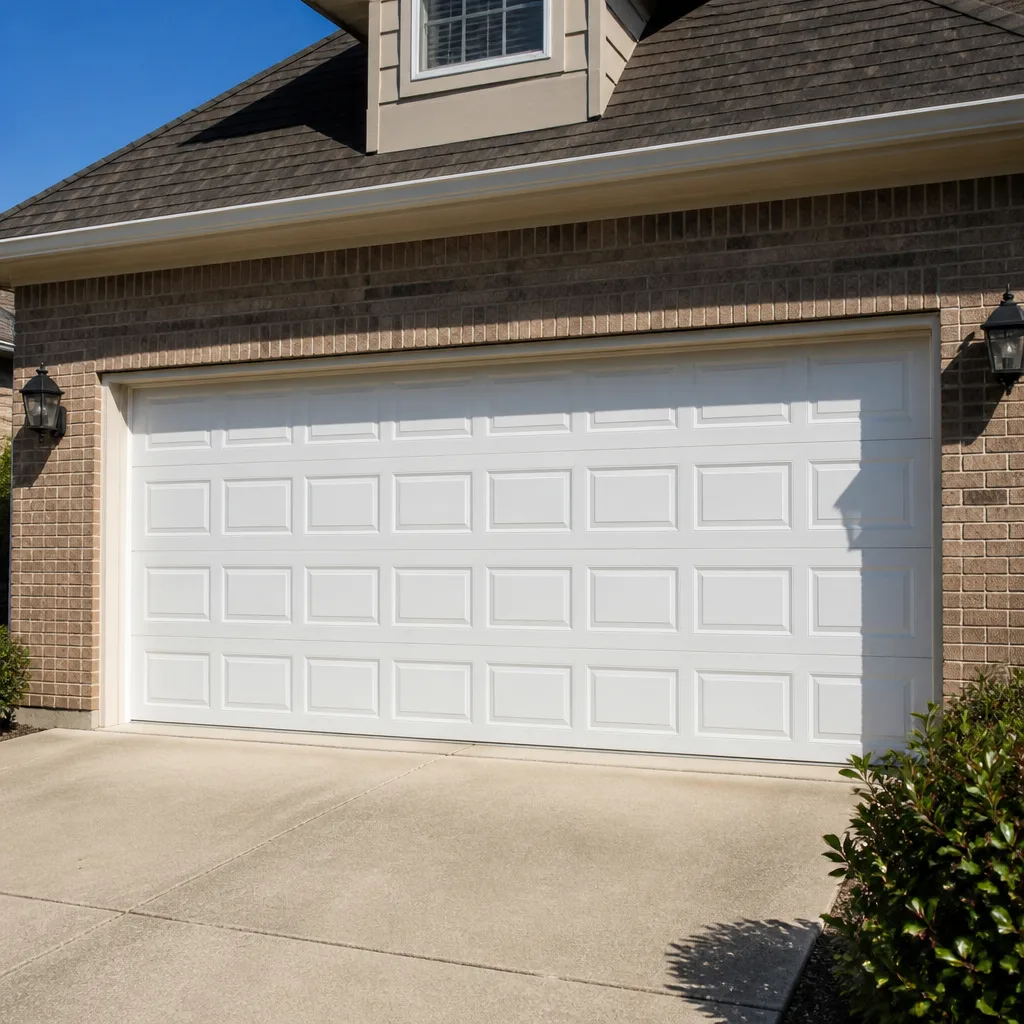 Raised-panel steel
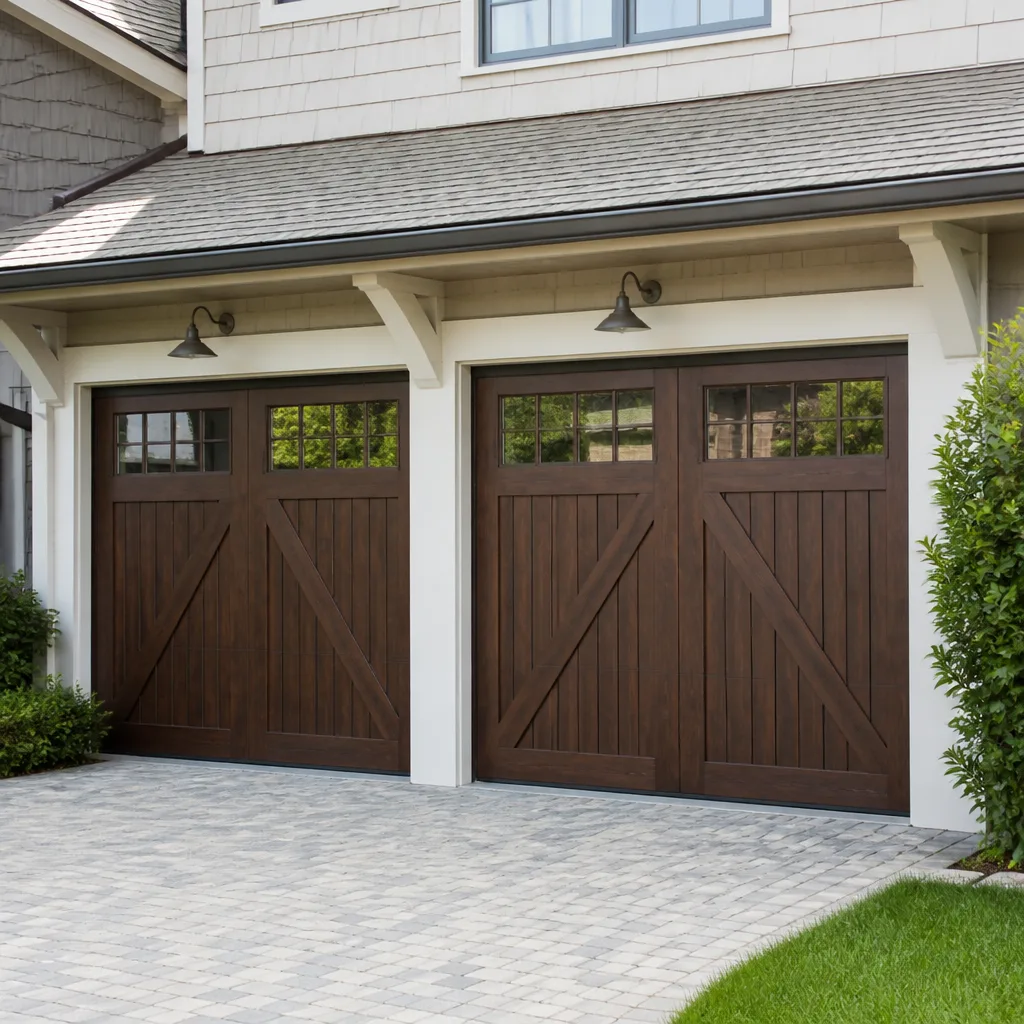 Carriage house
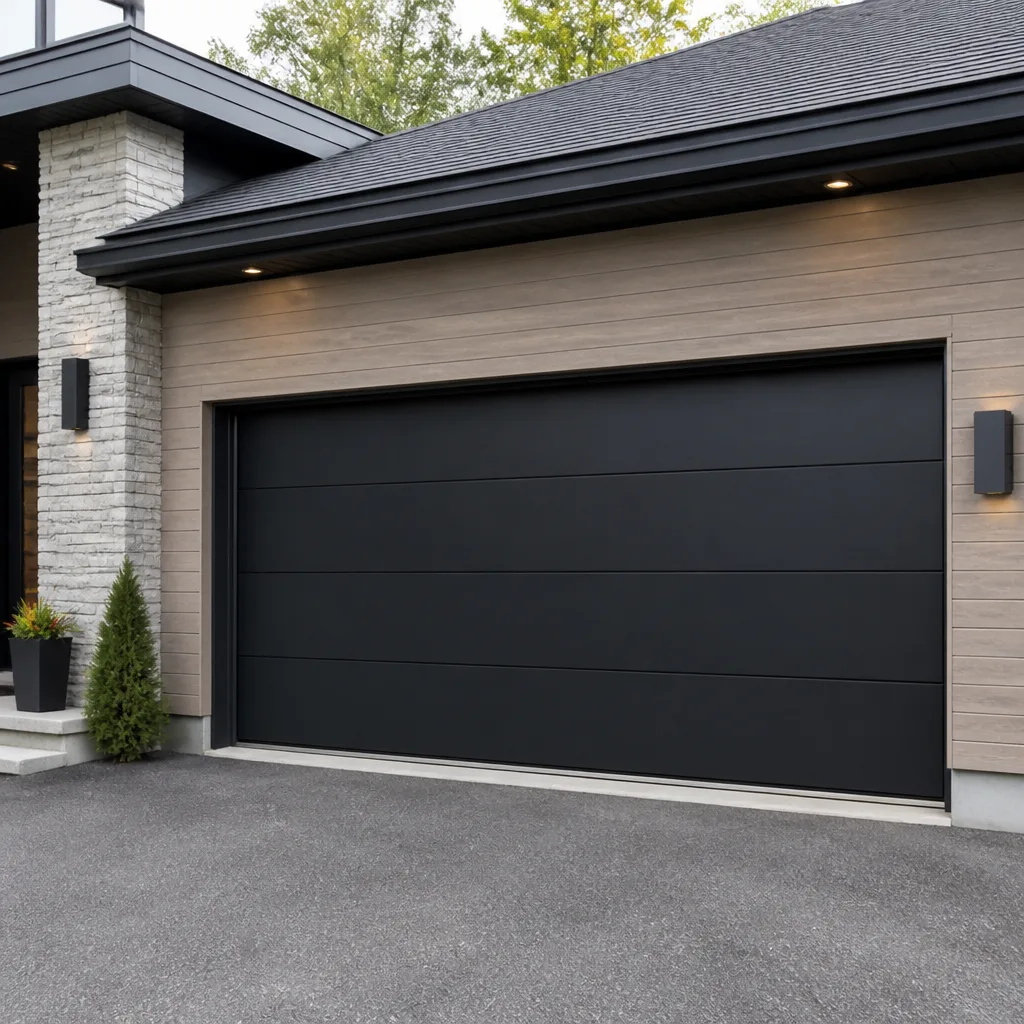 Modern flush
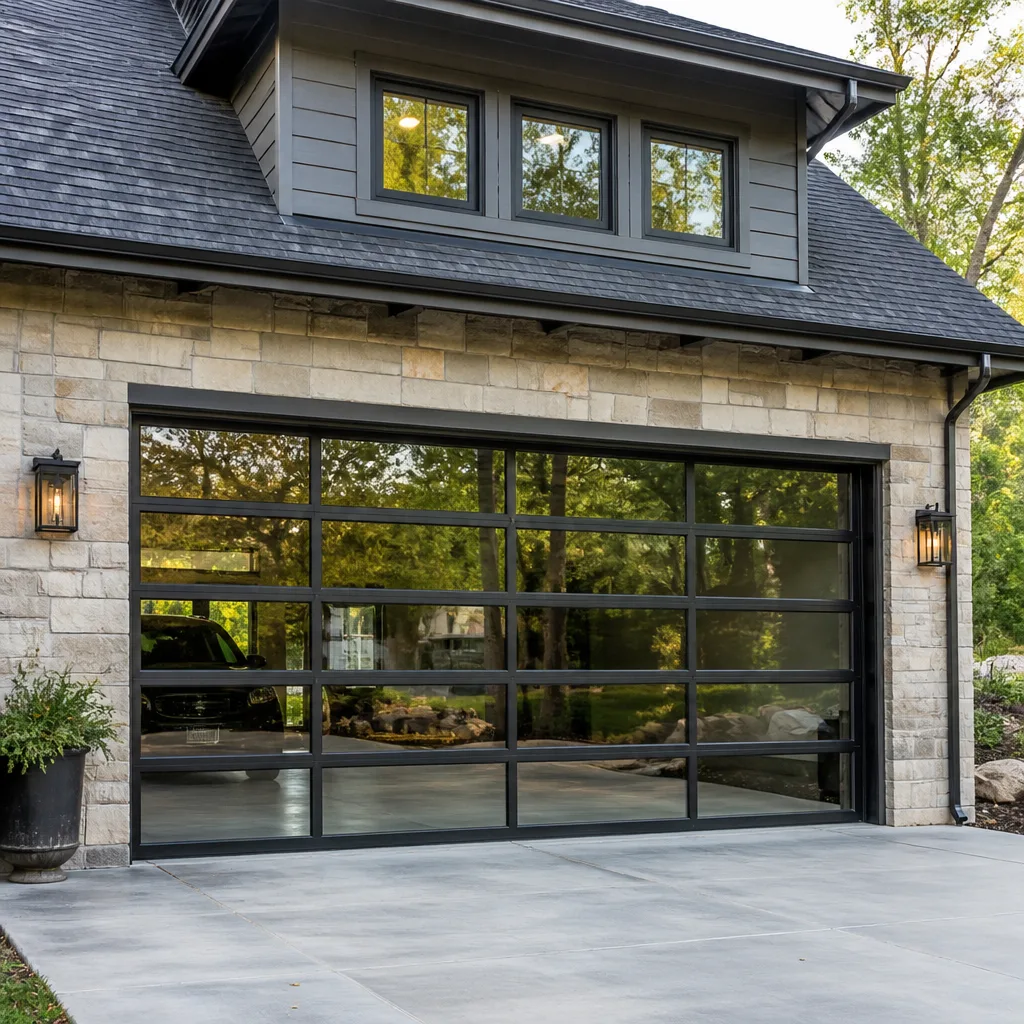 Full-view glass
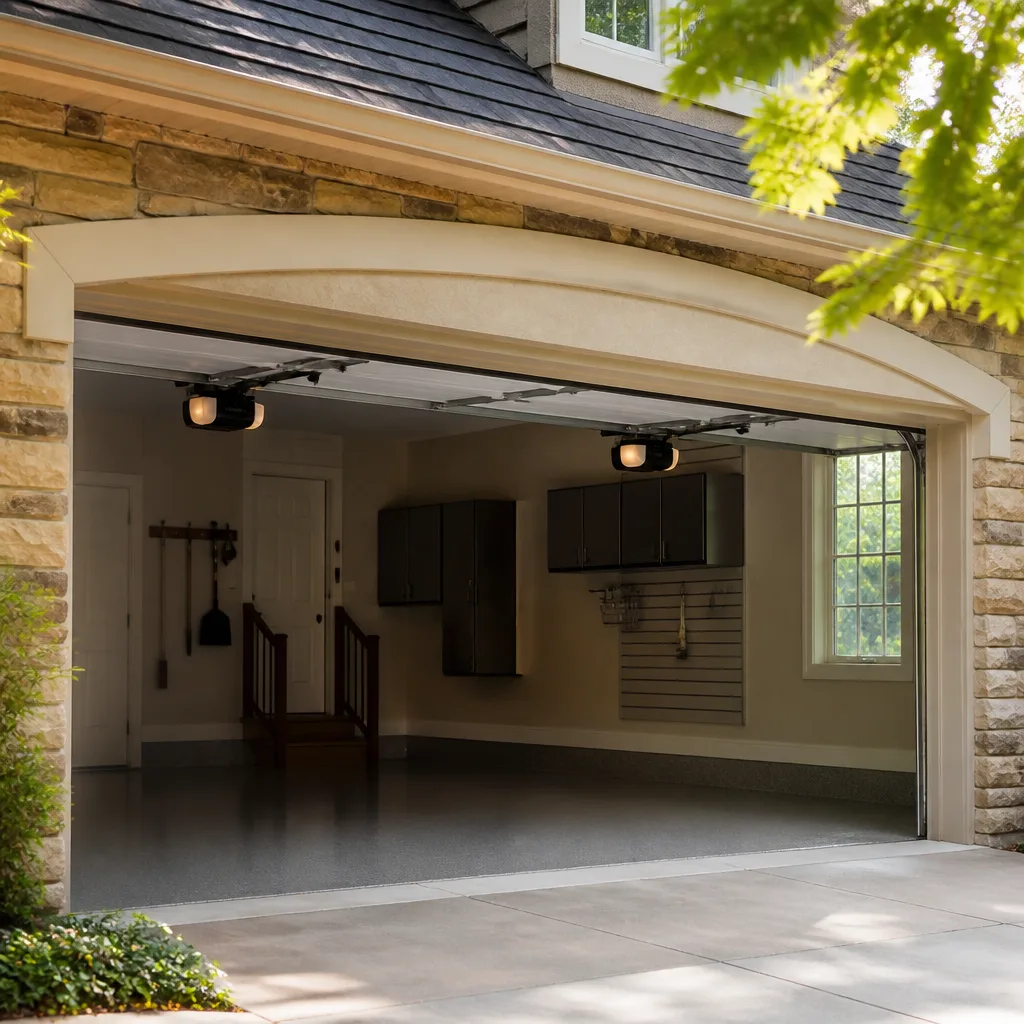 LiftMaster openers
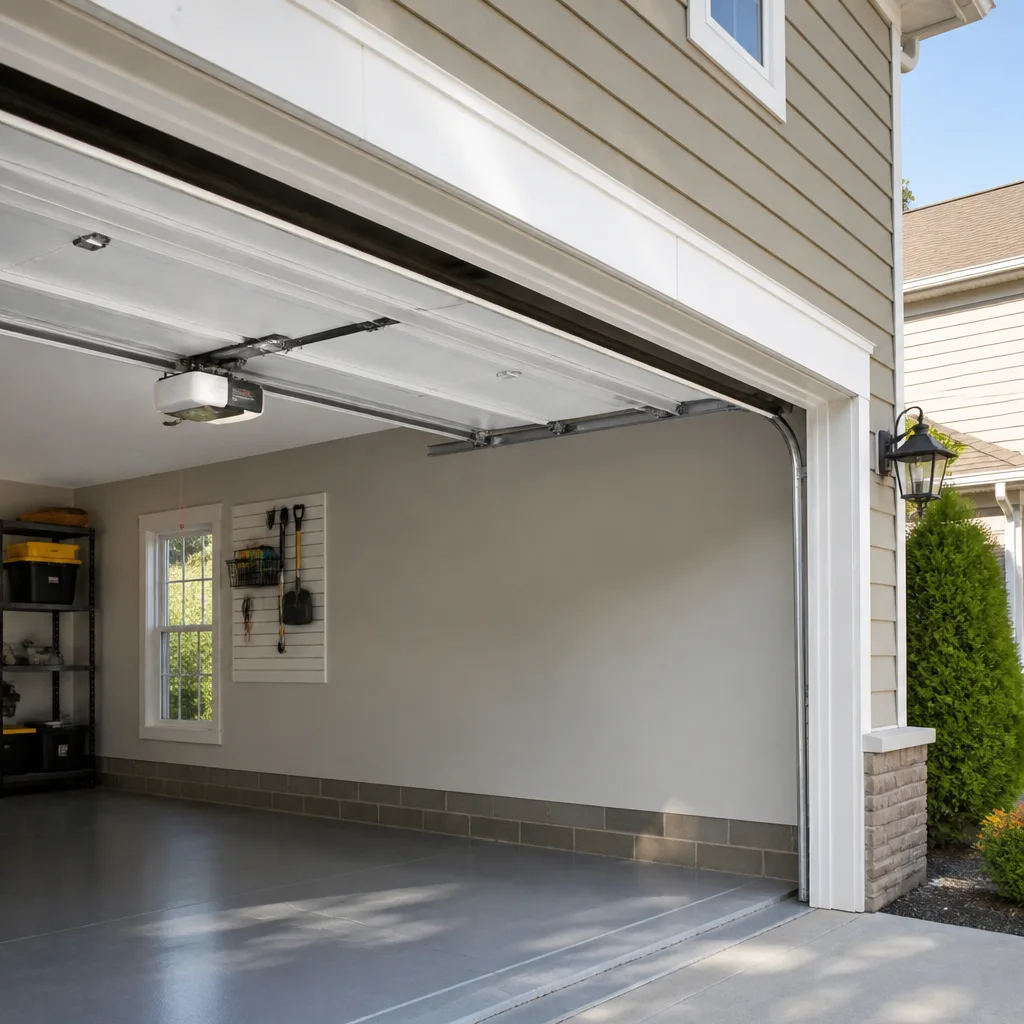 Chamberlain openers
Full 25-point door and opener safety check with every visit - springs, cables, rollers, tracks, and your LiftMaster or Chamberlain opener included
You get a price before we start. It does not change when the pro arrives.
Get your free estimateGarage Door Emergency Preparedness Guide for North Miami Homes
Most North Miami homeowners prepare for the mechanical failure, not the structural one. They keep a flashlight for the night the opener dies, but they don’t think about the door as part of the building envelope. That’s the misconception this guide sets out to fix. FEMA has documented that garage doors are the most common point of wind-driven failure in residential structures during hurricanes, and a door that passes a calm-day inspection can still fail under dynamic wind pressure if the hardware underneath has degraded. You’ll learn how to handle both kinds of emergency: the 7am jam that traps your car, and the storm-day scenario where a weak door becomes the reason a roof goes. We work on garage doors across North Miami, and the two failure modes are more connected than most people realize.
Quick Answer
A garage door emergency in North Miami comes in two forms: the mechanical failure that traps your car or leaves the house unsecured, and the storm event where a compromised door becomes the weak point in your home’s wind envelope. For the first, use the manual release, keep hands clear of springs and cables, and call for North Miami garage door repair. For the second, inspect and brace before a named storm, not during one. Preparation beats reaction, and the checklist below is designed to get you through both.
Styles & brands we work with
- Raised-panel steel
- Carriage house
- Modern flush
- Full-view glass
- LiftMaster openers
- Chamberlain openers
Table of Contents
- The First 30 Minutes of a Mechanical Failure
- How to Use the Manual Release During a Power Outage
- Emergency Lockdown Protocol Before a Named Storm
- Battery Backup Openers: What Actually Works in Florida Heat
- Post-Storm Inspection Protocol Before Re-Engaging the Opener
- The Hardware Check That Prevents Most Emergencies
- How the North Miami Climate and Housing Shape the Risk
The First 30 Minutes of a Mechanical Failure
The first thing to understand: most garage door emergencies get worse in the first half hour because the homeowner tries to force the door. A snapped spring, a jumped cable, or a bent track turns a contained failure into a real safety incident when a door is pushed up by hand or yanked with a car. In our experience across North Miami, the callers who do the least in the first thirty minutes end up with the simplest repair.
Here’s the safe sequence:
- Stop the opener. Press the wall button once to halt any travel, then pull the opener’s power cord or flip the breaker. Don’t keep cycling the motor hoping the door catches.
- Look, don’t touch. Stand back and check for a broken spring (a visible gap in the coil above the door), a cable hanging off a drum, or a door that’s visibly crooked in its tracks. Any of those means hands off.
- Secure the space. If the door is stuck open, don’t leave the house unsecured. If it’s stuck closed with a car inside, move on to getting the car out safely, which we cover next.
- Clear the area. Keep kids and pets away from the door and everything under it. A door held by a single spring or a bent track can drop.
- Call for service. Describe what you see so the technician arrives prepared. Emergency service is a core part of what we do, not an add-on.
What not to touch: the torsion spring above the door, the lift cables, and the bottom bracket. These are under extreme tension and can cause serious injury. We’ll say it plainly because it matters: spring and cable work is the most dangerous part of this trade, and it’s never a homeowner job. Our technicians have up to 9 years of experience precisely because this work demands it.
How to Use the Manual Release During a Power Outage
Every opener has a manual release, and knowing how to use it is the single most useful skill in a North Miami power outage. The release disconnects the door from the opener so you can move it by hand. On most openers it’s a red cord hanging from the carriage. On a screw-drive or older unit it may be a lever or a knob on the rail.
The typical steps:
- Make sure the door is fully closed before you pull the cord. Releasing a door that’s partway up can let it slam.
- Pull the release cord down and toward the door until it clicks free of the carriage. You’ll feel the door go slack.
- Lift the door by the handle or a panel edge, not the springs or cables, and raise it slowly. A properly balanced door should stay up on its own with modest effort.
- Open the car door and back out carefully. Close the door by hand afterward and lower it fully under control.
- Re-engage the carriage when power returns by running the opener and letting it reconnect, or by pulling the release cord back toward the opener as the door moves.
What if the cable mechanism is frozen or the door won’t budge even when released? That points to a seized drum, a broken spring, or a door that’s jumped its track. Don’t force it. A door that resists hand operation is telling you something mechanical has failed, and that’s the point to call for garage door repair rather than muscle the door and risk a cable snap.
Emergency Lockdown Protocol Before a Named Storm
A garage door is the largest opening in most North Miami homes, and during a hurricane it’s the one most likely to fail first. The reason is pressure: wind pushing on the outside of a house needs somewhere to equalize, and a door that bows inward or blows in lets the pressure rush through, which can lift a roof from underneath. That’s why the door matters in a way that a window doesn’t.
Before a named storm arrives, work through this lockdown sequence:
- Manually lock the door from the inside. Most residential doors have slide bolts on the inside of the bottom or second panel. Engage them so the door can’t be pushed up. This is the simplest and most reliable lockdown step.
- Disengage the opener using the manual release so the motor can’t be back-driven by wind.
- Inspect the tracks and hinges for loose bolts and re-tighten anything you can reach by hand. Loose hardware is where a door starts to come apart.
- Clear the path of the door so nothing inside can strike the panels or jam the bottom seal.
- Follow local requirements. Some jurisdictions require specific wind-rated bracing or door labeling for new construction, and temporary bracing systems should be installed to the manufacturer’s instructions, not improvised. Ask the City of North Miami building department what applies to your home, because the rules vary by age and construction type.
If your door is rated for wind but the hardware has degraded, the rating is only as good as the bolts and hinges holding it. That gap is exactly where a North Miami storm turns a nuisance into a structural problem, and it’s the reason a pre-season inspection is worth more than any last-minute brace.
Battery Backup Openers: What Actually Works in Florida Heat
A battery backup keeps your opener running when the grid goes down, but it won’t keep it running through a multi-day outage the way a sales sheet implies. A backup is designed to get you in and out a few times, not to run the door like normal. North Miami’s heat is hard on batteries, and a pack that sits untested for a year in a hot garage may not give you the cycles you expect when you need them.
Here’s how to think about it:
- What it’s for: opening the door once or twice after the power drops so you can park, leave, or get your car out. Typical use is a handful of cycles per charge on most models.
- What it isn’t for: running the door all day during an extended outage. Expect to use the manual release for anything beyond that.
- Heat matters: a garage in North Miami gets hot, and heat shortens battery life. Test the backup a few times a year, and replace the battery when the door slows or the backup light stays red.
- Brand matters: LiftMaster and Chamberlain both make backup units with a clear cycle indicator, and Genie units are common on newer installs. We work on all three and can tell you what fits your existing opener.
Where a backup is worth installing: any North Miami home where the garage is the main way in and out, and any household where a power loss locks someone in or out. Where it’s overkill: a door you rarely open, or a home with a second entry that doesn’t depend on the garage. If you’re not sure, a quick conversation is cheaper than guessing.
Post-Storm Inspection Protocol Before Re-Engaging the Opener
After a hurricane or severe storm passes, don’t hit the button and hope. Storm winds work loose hardware you can’t see from the driveway, and engaging the opener onto a misaligned door can bend a track or snap a cable. The safe approach is a hands-off inspection first, then a decision.
The checkpoints:
- Walk the perimeter of the door and look at the tracks on both sides. Are they straight, parallel, and still bolted to the wall? A track knocked out of alignment means the door isn’t running yet.
- Check the springs above the door. Look for a visible gap in the coil. If you see one, the spring has broken and the door must not be operated.
- Inspect the cables. They should be tight on their drums and seated in the grooves. A cable off its drum is a stop sign.
- Look at the panels and the bottom seal. Bent panels or a seal that’s been pushed out of place may mean wind got inside.
- Test the door by hand using the manual release. It should lift and lower with steady effort and stay in place when you let go. If it binds, won’t stay up, or drops, stop.
- Only then re-engage the opener and run it once at full travel to confirm it moves smoothly without the door wandering.
Any of the above failing means the door needs professional attention before it’s used again. A post-storm inspection is not just about the door working, it’s about not compounding a small impact problem into a spring or track failure the next time the motor runs.
The Hardware Check That Prevents Most Emergencies
Most garage door emergencies we see in North Miami start with hardware that was already failing. A door that’s been squeaking for a month, a hinge with one bolt missing, a spring that’s lost a little tension, all of these are warnings that a door gives you before it stops working. A ten-minute check once a season catches the majority of them.
What to check:
- Hinges and brackets: look for loose or missing bolts and rust at the pivot points.
- Rollers: worn or flat-spotted rollers make the door drag and put load on the opener. Replace them before they chew up the track.
- Springs: watch for a gap in the coil, sag, or a door that suddenly feels much heavier than it used to.
- Cables: they should be clean and tight, with no fraying or slack.
- Track: straight and clean, with no dents or debris.
- Bottom seal: intact so wind and water stay outside.
- Balance: release the door and lift it to waist height. A balanced door stays put. A door that falls back down or wants to rise is out of adjustment and putting strain on the opener.
None of this involves touching the springs or cables. You’re looking and testing by hand on a balanced door, not adjusting tension. The moment the door feels wrong, that’s the signal to book a routine service call rather than push it through another season. Catching a worn hinge is cheap. Catching a broken spring on a Sunday morning is not, at least in terms of your day.
How the North Miami Climate and Housing Shape the Risk
North Miami’s heat and humidity put wear on garage door hardware faster than a mild, dry climate would. Metal expands and contracts through the day, which works loose bolts and stresses hinges over time. Humid air gets into the pivot points and accelerates rust, especially on older steel doors and on the springs and cables behind the panels. A door that lives its whole life in climate-controlled space doesn’t see that kind of cycling.
The housing stock shapes the risk too. North Miami has a mix of mid-century single-family homes and newer construction, and the older doors are more likely to have worn rollers, stretched springs, and openers that weren’t designed for a modern smart-home setup. The newer doors tend to have wind-rated panels but may still have hardware that hasn’t been checked since they went in. Either way, the weak point is usually not the door itself, it’s the hardware underneath it.
That’s why a routine inspection matters more here than it might elsewhere. You’re not just keeping the door quiet. You’re keeping the largest opening in your home sound before the day the wind tests it. We work on garage doors across North Miami, from single-family homes to small commercial properties, and the pattern is consistent: the doors that get looked at are the ones that don’t become emergencies.
Common Mistakes to Avoid
- Trying to force a stuck door. Pushing a door up by hand or dragging it with a car when a spring or cable has failed can snap a cable or drop the door. Stop and call.
- Ignoring a broken spring because the door still opens. A door with one broken spring will still move, but the opener is working twice as hard and can fail or damage the track. Don’t run it.
- Disengaging the manual release during a storm to “let the door move.” Releasing the opener doesn’t make a door storm-safe. It makes it free to move, which is the opposite of what you want.
- Skipping the post-storm check. Running the opener on a door with a loose track or unseated cable turns a small fix into a bigger repair.
- Relying on an untested battery backup. A backup that hasn’t been cycled in a year may not open the door when the power is actually out. Test it.
- Letting a small noise go for months. A squeak or drag is a warning. In North Miami’s humidity, that warning moves faster toward failure than homeowners expect.
- Assuming a calm-day inspection means storm-ready. A door that opens fine in normal weather can still have hardware that fails under wind load. Look at the bolts and hinges, not just the motion.
See the difference
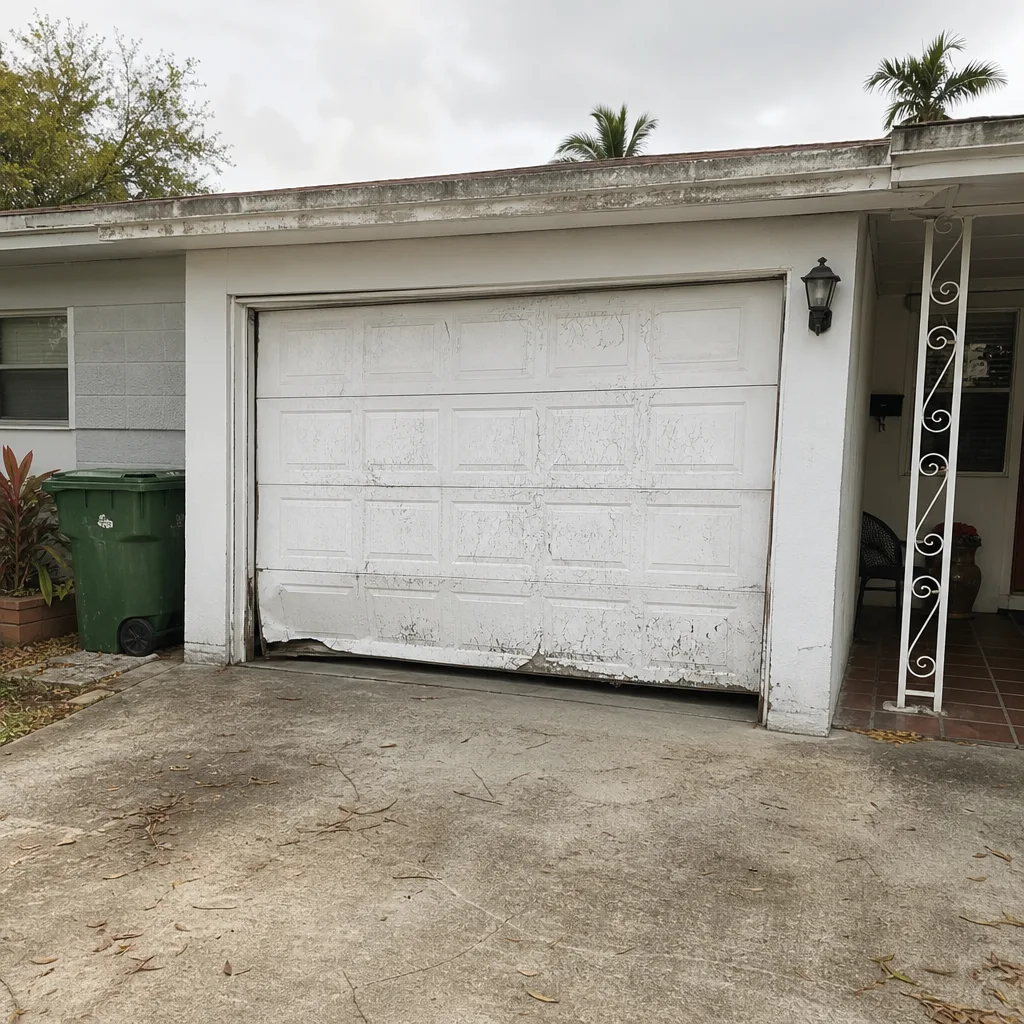 Before
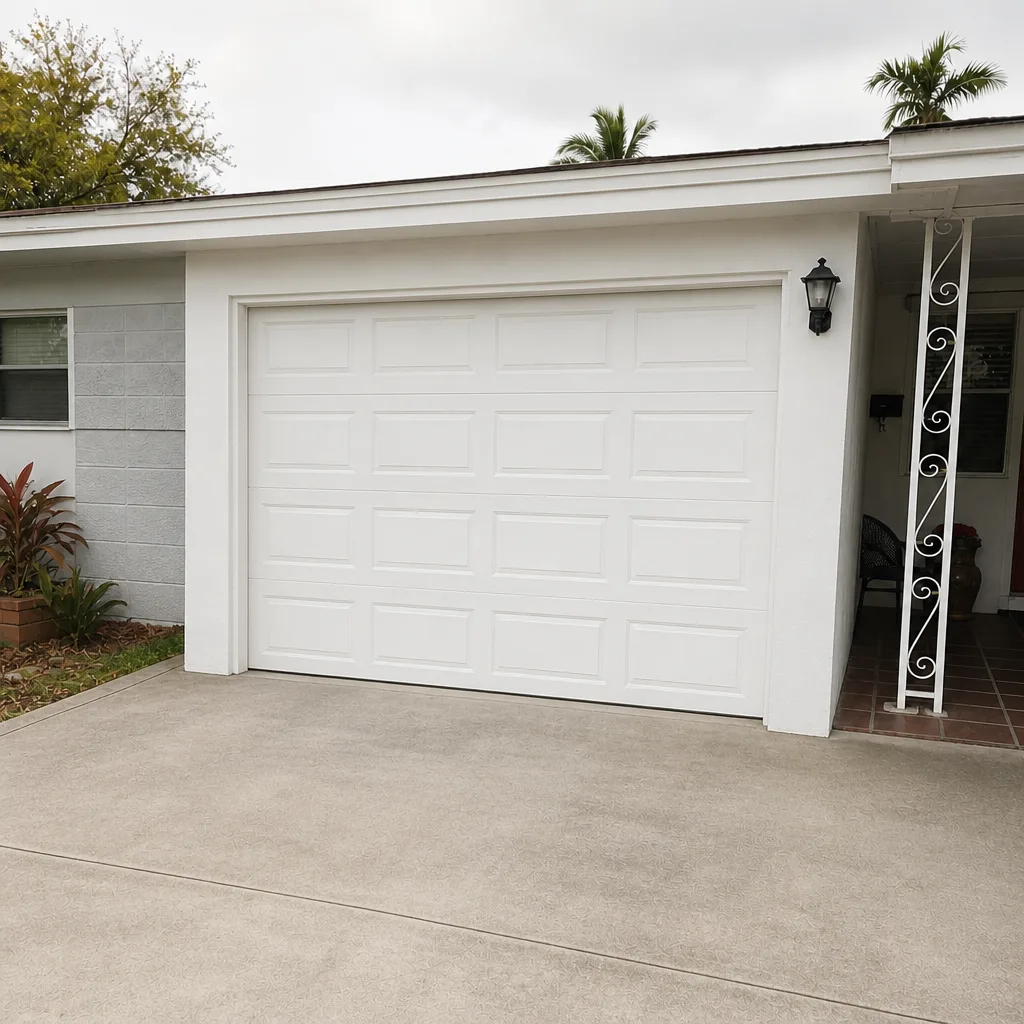 After
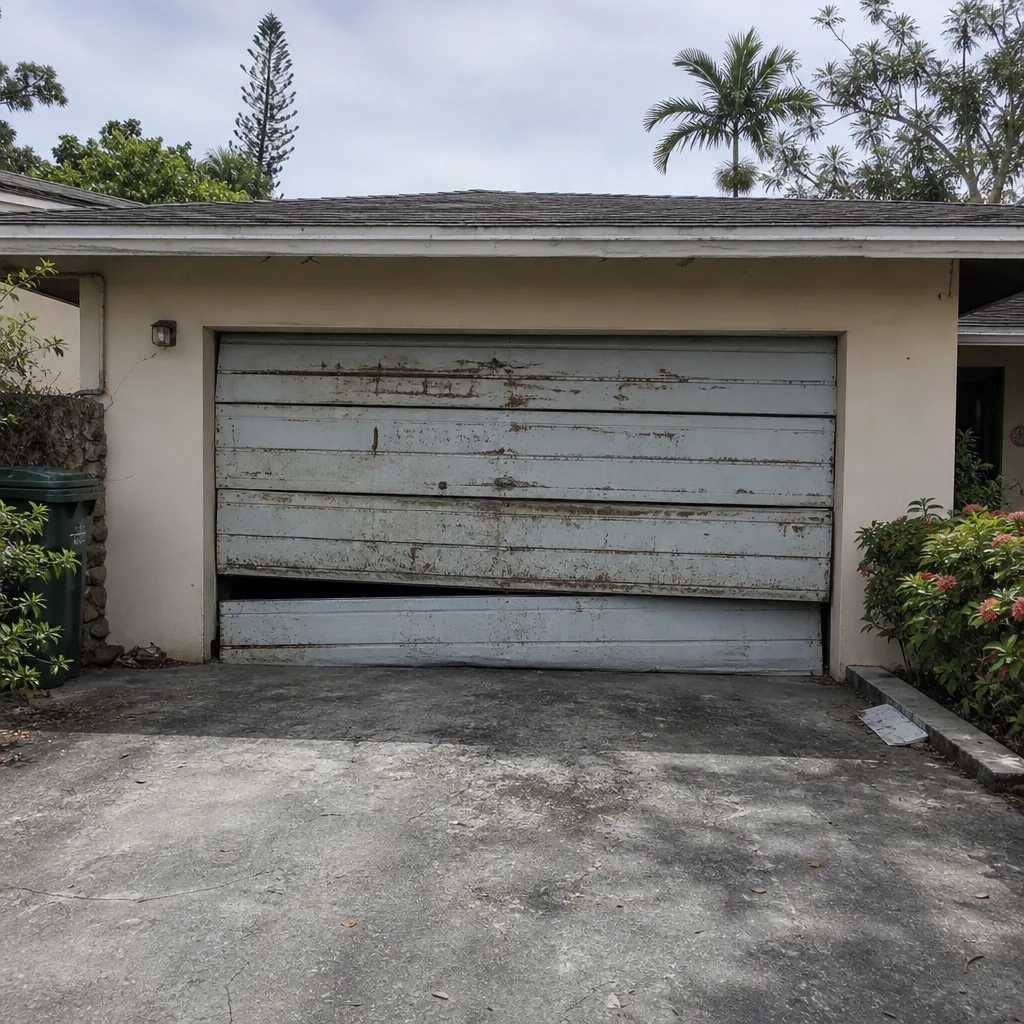 Before
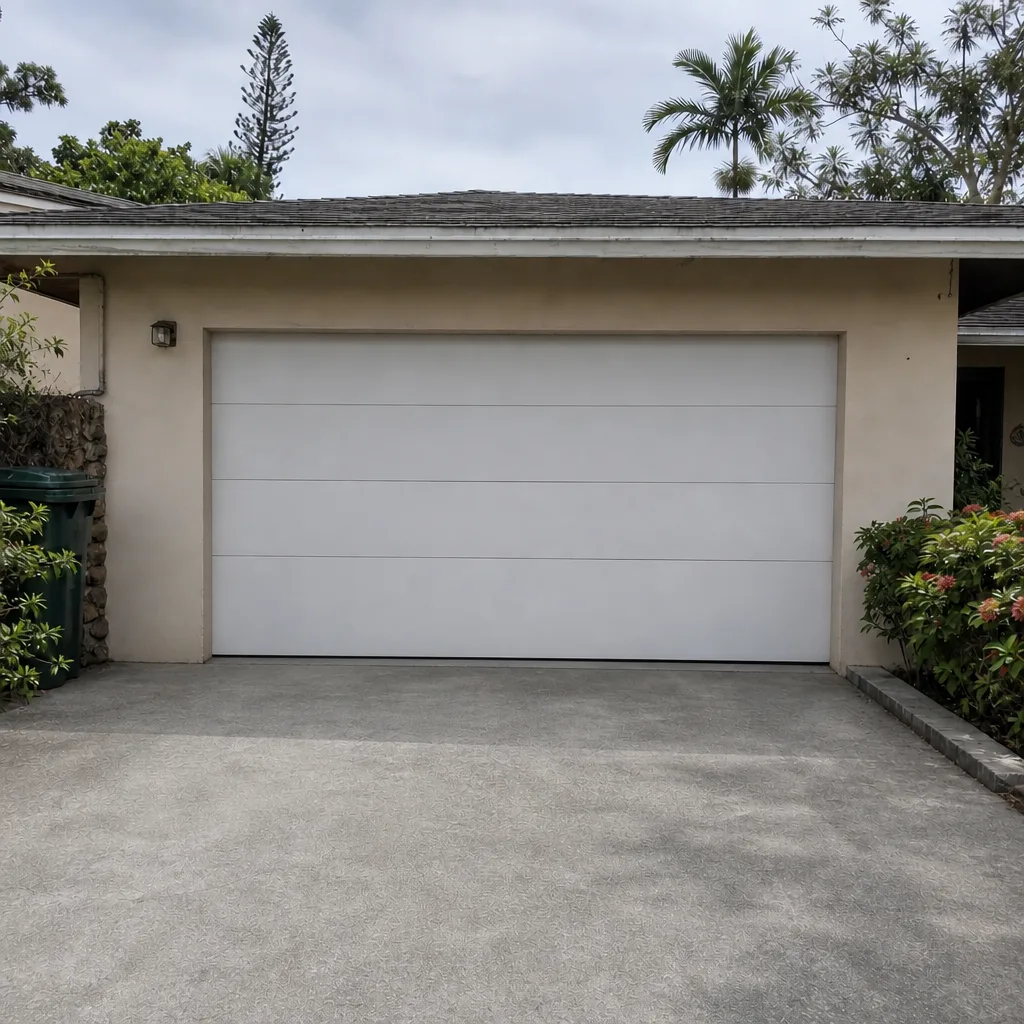 After
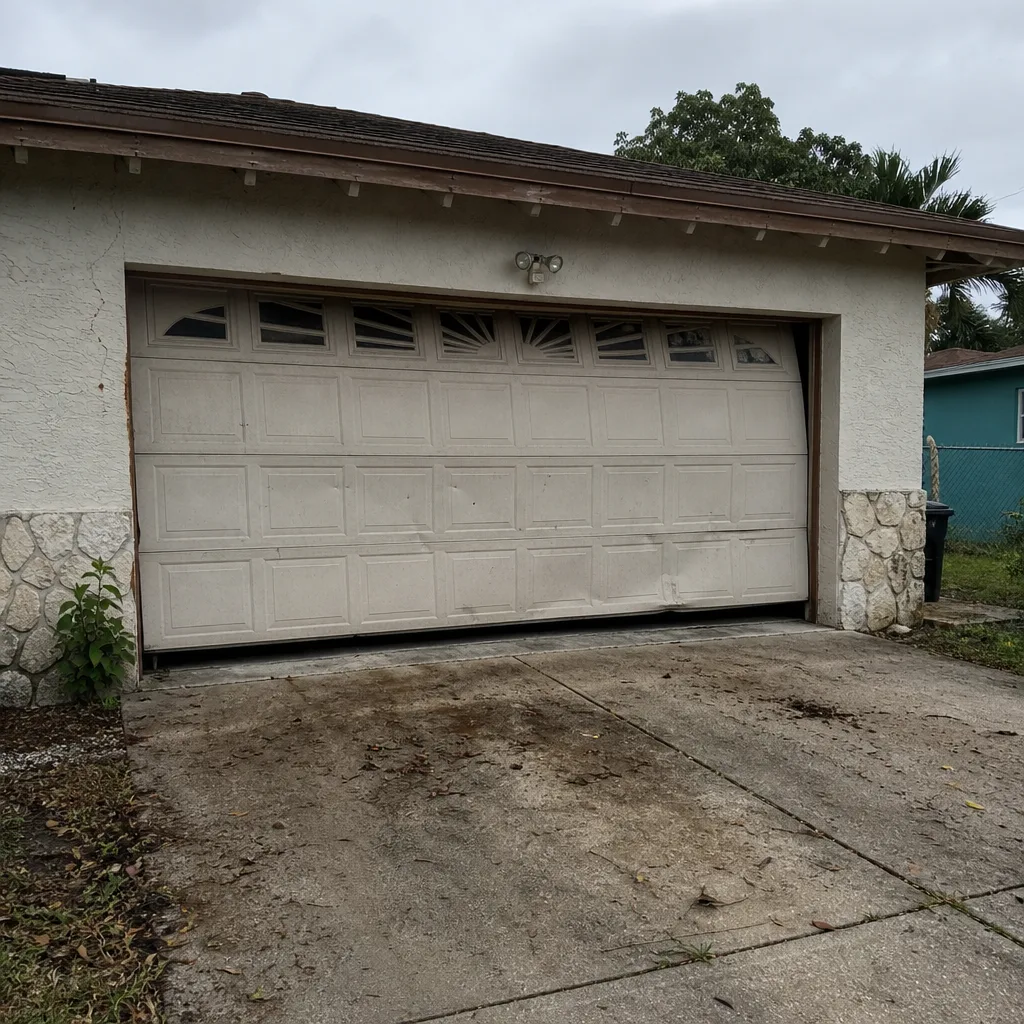 Before
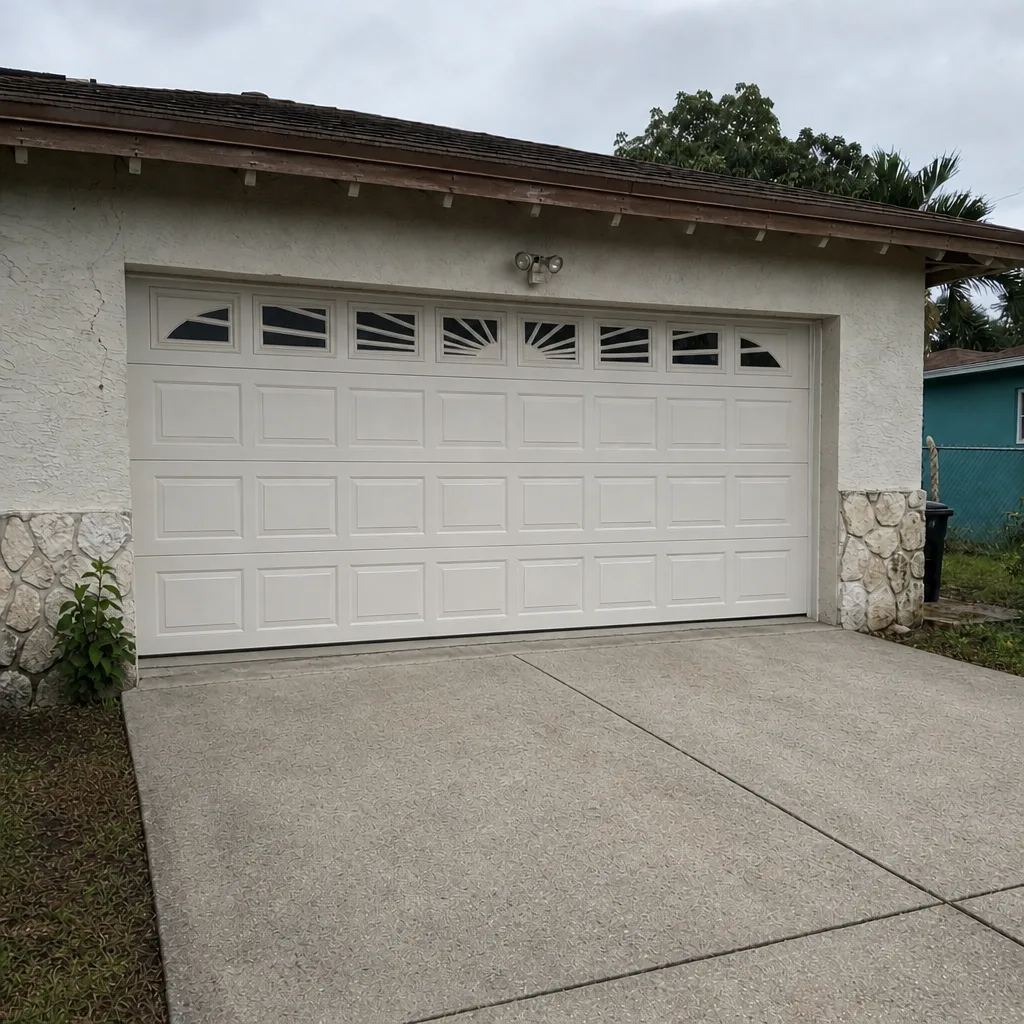 After
When to Call a Professional
Call us when the door has stopped moving and you don’t know why. Call us when you see a gap in a spring, a cable hanging loose, a track that’s bent, or a door that’s suddenly crooked. Call us before a named storm if your door has any of the warning signs above, because a lockdown on a failing door doesn’t protect the house. Call us after a storm if anything in the inspection failed. And call us when the opener runs but the door doesn’t move, or the door moves but the opener keeps cycling, because that’s an opener problem, not a door problem, and it needs a different set of tools. North Miami Garage Door Repair offers free estimates in North Miami, and we answer 24/7, so call (888) 923-0242. Fast dispatch from 7am to 7pm, Sunday through Friday. If a door fails on a Saturday, call and we’ll book you for Sunday.
Frequently Asked Questions
Stop the opener and don’t force the door. Press the wall button once to halt travel, pull the power cord or flip the breaker, then stand back and check for a broken spring, a loose cable, or an out-of-alignment track. If you see any of those, keep hands off and call for service. Getting your car out safely may mean a technician visit, not a DIY fix, because the door needs to be mechanically sound before you open it. For an exact diagnosis, call (888) 923-0242; estimates are free.
Yes, with the manual release. Pull the red cord (or lever) to disconnect the door from the opener, then lift the door by hand. Make sure the door is fully closed before you pull the release. A properly balanced door should lift with steady effort and stay up. If it’s heavy, binds, or won’t stay up, a spring or cable has likely failed and the door shouldn’t be moved. We answer 24/7 if you want to talk through what you’re seeing: (888) 923-0242.
Lock the door from the inside with the slide bolts, disengage the opener with the manual release, tighten any loose bolts you can reach, and clear the door’s path inside. Ask the City of North Miami building department what bracing requirements apply to your home, since the rules vary by age and construction. A door that fails inspection is the one to fix before the storm, not after. If you want a pre-season check, call (888) 923-0242; estimates are free.
It’s worth it if the garage is your main entry or a power loss would lock someone in or out. A backup gives you a handful of door cycles after the grid drops, not all-day operation, and North Miami’s heat shortens battery life, so test it a few times a year. We service LiftMaster, Chamberlain, and Genie units and can tell you what fits your opener. Call (888) 923-0242 for a free estimate on a new unit.
Inspect the tracks, springs, cables, panels, and bottom seal with the door closed and the opener disengaged. Look for a gap in the coil, a cable off its drum, or a track knocked out of alignment. Then test the door by hand: it should lift with steady effort and stay put. If anything fails, don’t run the opener. For a post-storm inspection, call (888) 923-0242; estimates are free.
No. The written estimate sets the price, and the price is quoted and agreed before any work starts. What we find on site is what we quote for, and you approve it before we touch the door. That’s true for a spring repair, an opener replacement, or a full door install. Call (888) 923-0242 for an exact quote on your North Miami door; the estimate is free.
The Bottom Line
Two emergency scenarios, one preparation plan. The mechanical failure is handled by stopping the opener, keeping hands off the springs and cables, using the manual release if you’re locked in, and calling for service. The storm scenario is handled by locking the door from inside, disengaging the opener, tightening hardware, and following the city’s bracing rules before the wind arrives. After either event, inspect before you press the button again. The hardware underneath the door is what fails first in North Miami, and a routine check is what keeps a small wear item from becoming a Sunday morning emergency. Our technicians have up to 9 years of experience, and we work on your brand, whether that’s Clopay, Amarr, Wayne Dalton, or another of the eight major manufacturers we service. Springs, openers, panels, and full doors, all under one company, so there’s no second call and no handoff.
If your door is giving you warning signs, or you want a pre-season check, call North Miami Garage Door Repair at (888) 923-0242. We answer 24/7. Fast dispatch from 7am to 7pm, Sunday through Friday. The estimate is free, the price is agreed before any work starts, and a routine call now is cheaper than an emergency later. For opener issues specifically, our garage door opener repair team can look at both mechanical and connected systems, and if the spring is the problem, our garage door spring repair service handles the tension work that should never be a DIY job.
Written by the team at North Miami Garage Door Repair.