
Last updated November 23, 2026
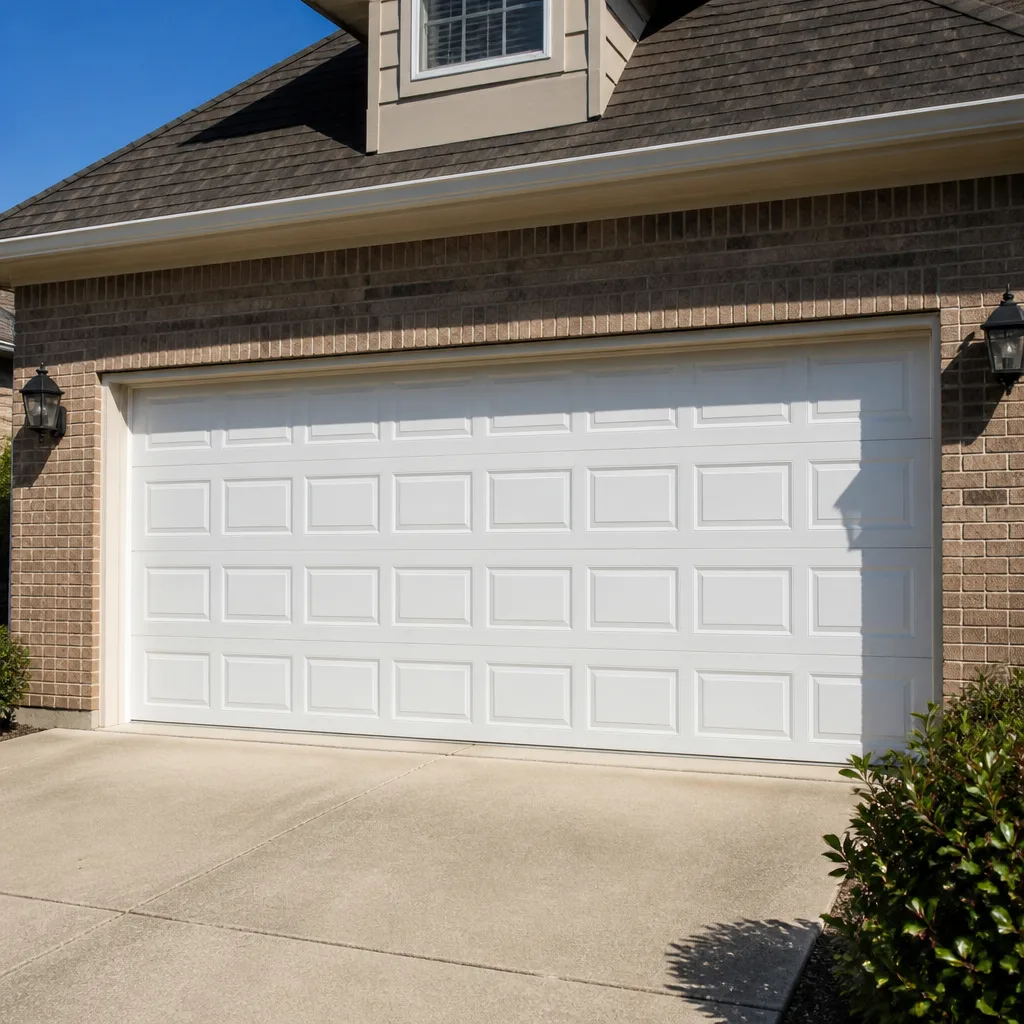 Raised-panel steel
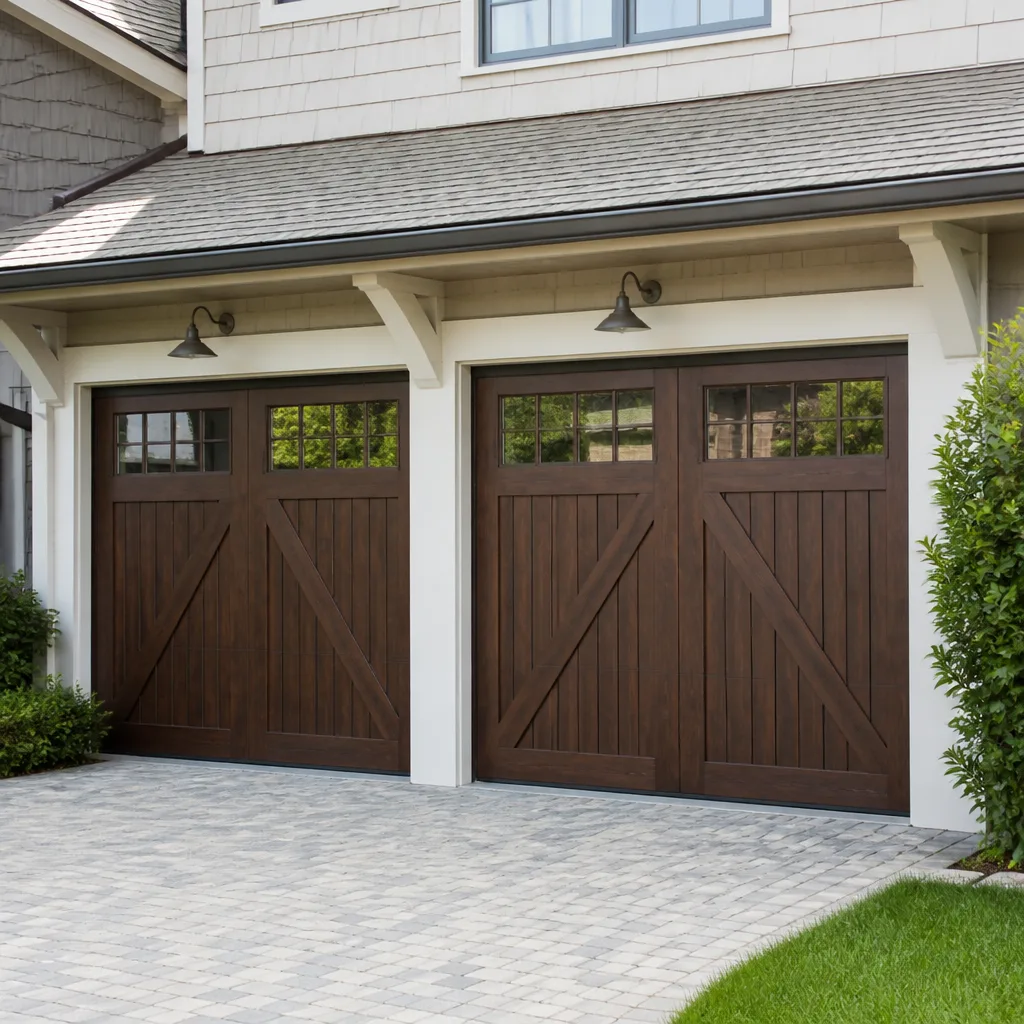 Carriage house
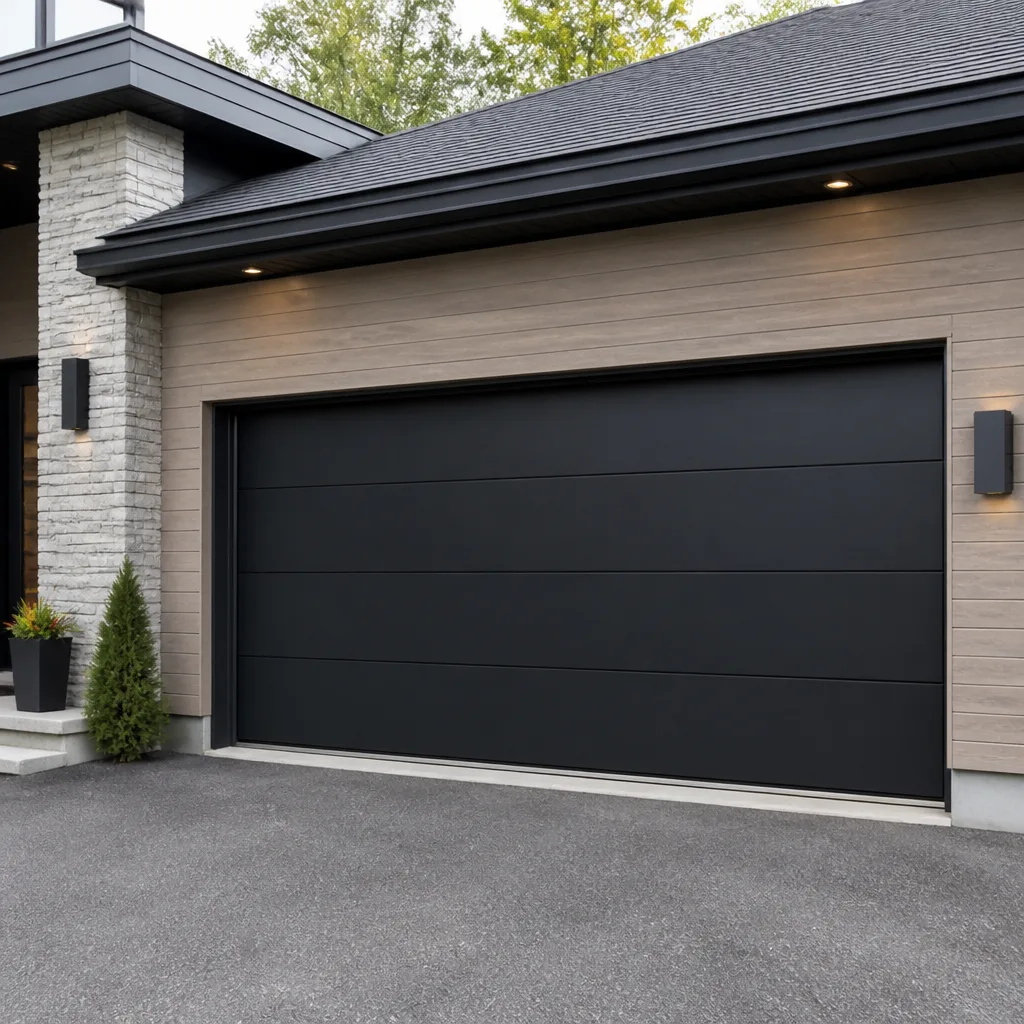 Modern flush
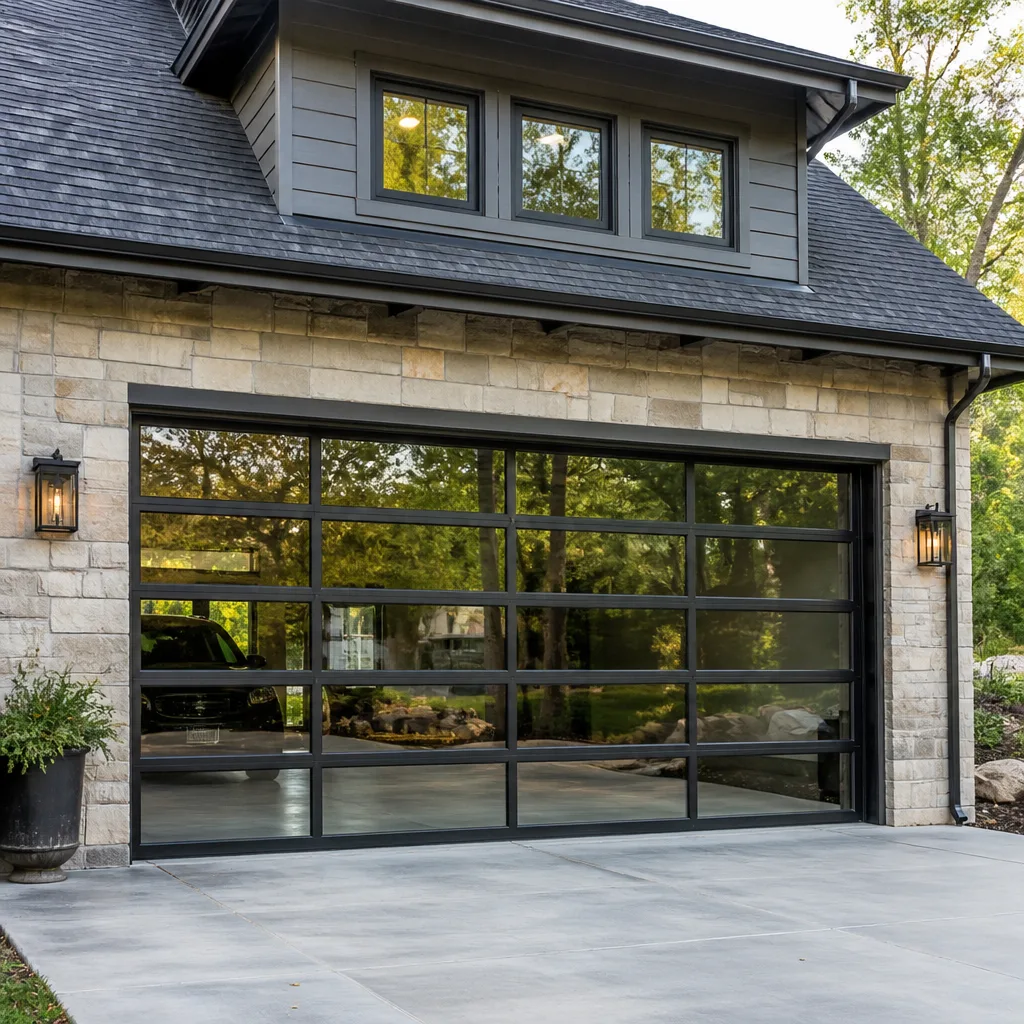 Full-view glass
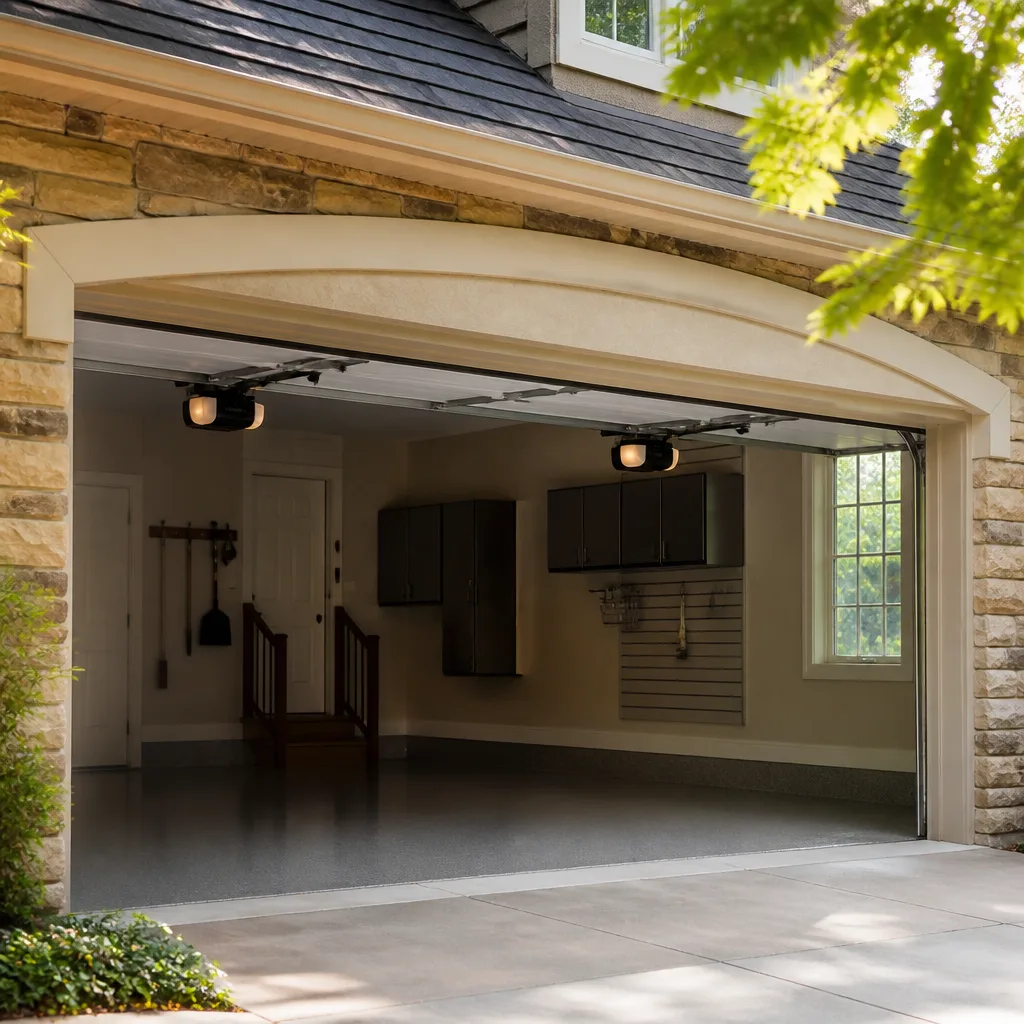 LiftMaster openers
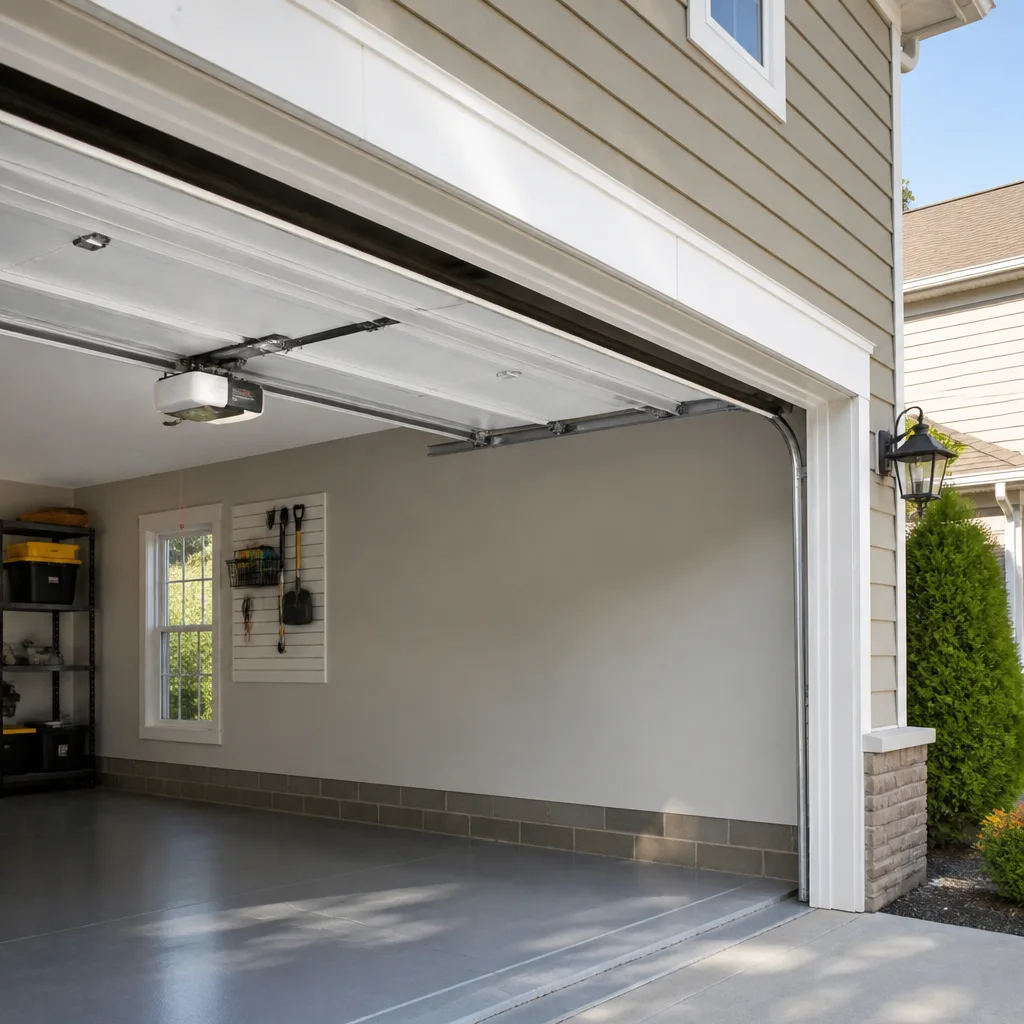 Chamberlain openers
Full 25-point door and opener safety check with every visit - springs, cables, rollers, tracks, and your LiftMaster or Chamberlain opener included
You get a price before we start. It does not change when the pro arrives.
Get your free estimateThe Complete Guide to Garage Doors in North Miami
Most garage door guides are written for homeowners in Ohio. If you’re in North Miami, your door faces something entirely different: relentless humidity, Category 4 wind-load requirements, and an inspection culture that starts at the HOA gate. A door that works fine in a dry, mild climate can fail here in ways that surprise transplants – corroded cables, seized springs, and hardware that pits long before its rated lifespan. What follows isn’t a brand catalog or a sales pitch. It’s a working guide to how garage doors actually behave in North Miami, what Florida Building Code demands of them, how to tell a repair from a replacement, and where the real safety lines are. Whether your door is stuck, aging, or simply due for a hard look, we’ll walk through it.
Quick Answer
Garage doors in North Miami must be selected and installed with Florida Building Code wind-load requirements in mind, which means a reinforced door or a rated retrofit system, not a builder-grade panel from a big-box store. The local humidity and salt air accelerate corrosion on springs, cables, rollers, and tracks, so material choice and regular lubrication matter far more here than in inland markets. Repairs are often the right call, but on doors past the 15-20 year mark or doors that fail inspection, replacement usually costs less over time.
Styles & brands we work with
- Raised-panel steel
- Carriage house
- Modern flush
- Full-view glass
- LiftMaster openers
- Chamberlain openers
Table of Contents
- Why a Garage Door in North Miami Is Different
- Florida Building Code and Wind-Load Requirements
- Miami-Dade NOA Ratings and the Brands That Carry Them
- How Humidity and Salt Air Damage Springs, Cables, and Tracks
- HOA Approval in North Miami: What Installers Need to Provide
- Repair vs. Replacement: How to Decide
- The Full-Service Spectrum: Springs, Openers, Panels, Full Doors
- A Maintenance Routine That Actually Works Here
Why a Garage Door in North Miami Is Different
A garage door is the largest moving object in most homes. In North Miami, it’s also the most weather-exposed. The gap between what a national guide tells you and what actually happens to metal and wood in this climate is wide enough that it’s worth talking about directly.
Three forces shape every garage door decision in North Miami:
- Wind exposure. Miami-Dade County sits in the High-Velocity Hurricane Zone, the strictest wind-load region in the country. Every door installed or replaced here has to meet code requirements around design pressure, not just open and close.
- Humidity. Year-round moisture in the air attacks painted steel, wood-composite panels, and especially the wire in torsion springs and the strands in lift cables.
- Proximity to the water. If your home sits a few blocks from Biscayne Bay or the Intracoastal, airborne moisture carries trace salts that speed up pitting on any bare or poorly finished metal.
The result: springs that sag early, cables that snap without warning, and door panels that look fine from the street but show bubbling paint and rust inside. We’ve worked on doors in North Miami where the tracks themselves had accelerated wear from corrosion, not just from use. That’s a complication a homeowner in a dry climate simply doesn’t encounter. Knowing it changes how you choose materials, how often you service, and what to expect when a door fails.
Florida Building Code and Wind-Load Requirements
Florida Building Code Chapter 16 governs structural design loads, including wind. In Miami-Dade County, doors installed on a new or replaced opening must meet a specified design pressure – usually expressed in pounds per square foot (psf) – that’s calculated based on the building’s exposure, height, and location. You don’t guess at this. It’s on the permit documents.
What that means in practice:
- Get the design pressure figure before you shop. Your permit or an engineer’s letter will state the required psf for your opening. A door that doesn’t meet it can’t legally be installed.
- Look for the rated assembly, not just the door. Wind-rated garage door systems include the door panels, the tracks, the reinforcement struts or post system, and the specific anchors. Mixing a rated door with unrated tracks is a common shortcut and it won’t pass.
- Pull a permit. Replacement in Miami-Dade generally requires one. Ask your city’s building department for the exact requirements for your address – every jurisdiction can differ on paperwork, inspection sequence, and required documentation.
- Keep the paperwork. The product approval documents, the installation instructions, and the inspection sign-off all matter. If you ever sell the home, a buyer’s inspector will want to see them.
This is the first place a general handyman falls short. Wind-rated installation is a code-driven job, and the door has to be anchored into structure that meets the code’s assumptions. If your door was installed before the stricter ratings took effect, or you suspect it wasn’t rated at all, it’s worth having it evaluated. For homeowners in North Miami, that evaluation is the difference between a door that holds through a storm and a door that becomes the largest opening in the house.
If you’re dealing with a door that’s already failed or isn’t closing correctly, garage door repair should include a check on the wind-rated hardware, not just the opener.
Miami-Dade NOA Ratings and the Brands That Carry Them
Miami-Dade County issues a Notice of Acceptance (NOA) for products approved for use in the High-Velocity Hurricane Zone. An NOA is a formal document product manufacturers obtain, and building departments require it for doors installed in this market. Not every model from every brand carries an NOA – it’s usually specific to a wind-rated line.
What to ask when you’re shopping:
- The NOA number for the specific model. Not the brand’s general reputation, the actual model number. Ask to see the document.
- Whether the NOA covers the reinforcement system you’re getting. Some approvals specify a particular strut pattern or post layout.
- Whether the opener you’re pairing it with is rated for a wind-rated door. A heavier reinforced door may need a stronger operator, and the wrong pairing stresses everything.
Several of the brands we work on regularly do offer NOA-rated lines. Amarr and Clopay both manufacture wind-rated residential models with product approvals for Miami-Dade. Wayne Dalton does as well in its more robust lines. Genie and LiftMaster, which are primarily opener brands, have operators and accessories that fit rated doors, so the pairing matters as much as the door itself. We’re trained on all of these brands and won’t guess at compatibility – we check.
A door without the right NOA can be a problem at inspection and, in many cases, at resale. If you’re replacing a door in North Miami, this document is part of the job, not an optional extra.
How Humidity and Salt Air Damage Springs, Cables, and Tracks
Everything on a garage door that moves is exposed. In North Miami, the wear pattern on springs and cables is measurably faster than in dry climates, because humidity and airborne salt don’t just make metal rusty – they pit the surface, thin the cross-section, and weaken the wire from the outside in.
What gets hit hardest:
- Torsion springs. A torsion spring is a coiled wire under extreme load. When the wire surface corrodes, it loses its ability to withstand the cycles. The oil-tempered steel common in many springs is particularly vulnerable; powder-coated springs and those with anti-corrosion finishes last longer here.
- Lift cables. Cables run from the bottom bracket up to the drums. They’re typically galvanized steel, but “galvanized” doesn’t mean rust-proof in a humid, salt-laden environment. Strand-by-strand corrosion is invisible until the cable fails.
- Rollers. Steel rollers rust and seize. Nylon rollers are the upgrade that makes a real difference in this climate, because they don’t corrode and they run quieter on worn tracks.
- Tracks. Steel tracks with a poor finish rust at the bends and anchor points. Galvanized or heavy-gauge hardware holds up better; low-grade builder hardware is where you’ll see early wear.
- Bottom brackets and hinges. These small parts carry enormous load and are often the first to show deterioration. They’re also the parts most likely to replace with cheaper unrated versions if the installer isn’t paying attention.
What resists it? Stainless and galvanized hardware, powder-coated or oil-tempered springs with a corrosion barrier, nylon rollers, and regular lubrication with a silicone spray or a dedicated garage door lubricant applied to the torsion spring itself and to the hinges and rollers. Skip the WD-40 – it’s a cleaner, not a lubricant, and it strips the protective film. A light coat of garage door lubricant applied every few months makes a visible difference to spring and cable life in North Miami.
HOA Approval in North Miami: What Installers Need to Provide
A large share of homes in North Miami sit inside communities with deed restrictions and architectural review committees. Before you buy or install a door, check whether your HOA requires prior approval, and what documentation they want. This trips up more homeowners than anything else.
What the HOA will typically ask for:
- A specification sheet for the exact door model – panel style, color, window options, and material.
- A color reference. Many HOAs restrict door colors to a specific set. Bring the manufacturer’s color chip or sample.
- A drawing or photo of the intended look, often requested for visible-from-street replacements.
- Confirmation that the door meets Florida Building Code, including wind-load compliance and the product approval.
- Signature from a licensed contractor or the installer confirming the scope of work – many HOAs want to see who’s doing it.
Here’s the part most installers skip: your door contractor should be able to hand you the manufacturer’s specification documents, the NOA reference, and a written scope in advance of installation. If a contractor can’t provide those up front, the HOA process will stall, and the door can’t be installed legally. Ask before you sign. We keep these documents available for every brand we work on, because the HOA review is not the installer’s job to manage – but the paperwork is.
Once your door is approved and installed, keep the approval letter and the spec sheets together. If you go to sell, an agent or buyer will ask.
Repair vs. Replacement: How to Decide
The right call on a failing door usually comes down to four questions. If the frame and structure are sound, repair is often the answer. If the structure is compromised or the door is past a reasonable lifespan, replacement makes more financial sense.
- What failed? Springs, cables, rollers, hinges, and openers are all replaceable – and repair is the clear choice. Panel damage is a middle case: single panel or a few panels can be replaced in many cases, but on doors older than about 15 years, finding a matching panel or color can be hard.
- Is the door wind-rated to your home’s required design pressure? If not, replacement generally is the move. Repairing a non-compliant door leaves the compliance problem in place.
- What’s the age? A typical door with regular maintenance can run well past 15-20 years. Past that, on a door with corrosion on tracks and structural hardware, you’re repairing around failing bones.
- What’s the total repair cost? If repairs approach half the cost of a new door and the door is already near end of life, put the money into a new, rated door.
Cost-wise in the North Miami market, spring replacement generally runs in the low hundreds per spring, before considering the companion spring if it’s a matched pair. Cable and roller replacement sits in similar territory. A full replacement with a wind-rated door runs into the thousands, depending on size, material, window pattern, and whether the opener needs replacing too. The written estimate sets the final price, and any quote should be itemized to show hardware, disposal, and permit costs separately.
If you want a fast read on repairs, our garage door spring repair service handles springs, cables, and the surrounding hardware in one visit. If you’re hearing odd sounds from the operator or the door only runs partway, that points toward opener issues, and garage door opener repair is the corresponding path. North Miami Garage Door Repair covers both under one roof, so you’re not bounced between contractors.
The Full-Service Spectrum: Springs, Openers, Panels, Full Doors
Garage door work splits into four service lanes. Knowing which one you actually need saves time and money.
- Spring and cable repair. The most demanding service mechanically. This is where the risk sits, because the springs and cables are under high tension. It’s also the most common failure point in this climate.
- Opener repair and service. Openers age too, and a newer operator paired with a failing door creates more problems. We work on both legacy chain-drive and modern belt-drive units, and on smart-home connected systems from LiftMaster and Chamberlain, plus Genie and the other brands we cover.
- Panel and hardware replacement. Single-panel replacement, bottom-bracket swaps, roller and hinge refreshes. This is where the “repair vs. replace” call often fits best.
- Full door installation. New construction or full replacement, including the wind-rated system, tracks, hardware, and opener if needed. This is where the code and NOA discussion from earlier matters most.
We handle all four lanes. That’s not an upsell – it means a homeowner in North Miami gets a straight technical answer about which lane they’re in, without a contractor whose only tool is a replacement quote telling them the repair isn’t possible. If you’re replacing the whole door, our North Miami Garage Door Repair page covers the service overview, and the install side is the same crew relationship from quote to final inspection.
A Maintenance Routine That Actually Works Here
Garage doors in North Miami need a maintenance routine that a homeowner in a dry climate wouldn’t consider. The goal is to extend spring and cable life, catch corrosion early, and avoid a failure that strands a car or leaves the home open.
- Lubricate the moving metal twice a year. Use a dedicated garage door or silicone lubricant on the torsion spring, hinges, rollers, and the pivot points. Wipe off grit before applying.
- Inspect springs and cables visually once a year. Look for visible rust, fraying on cables, or a gap in the coils. Don’t touch or test the tension yourself – more on that below.
- Check the safety reverse. Place a small, light object under the closing door and confirm the operator reverses. If it doesn’t, the opener’s safety system needs attention.
- Test the manual release. In a power outage, you need to be able to disengage the door with the red cord. Test it once a year and make sure everyone in the household knows where it is.
- Look at the weather seal and bottom bracket. Worn seals let air and moisture in, accelerating corrosion on the hardware above. A five-dollar seal is cheaper than a rusted bracket.
- Watch for a door that runs unevenly or stops short. This usually signals balance or opener issues and is worth a professional look before it becomes a failure.
One hard safety rule: springs and cables are under extreme tension. We never recommend homeowners adjust them, and we never talk through a DIY fix on them – the injury risk is real. Watch them for deterioration, but leave the repair to a trained technician. That’s the single most important line in this guide.
Common Mistakes to Avoid
- Buying a door without checking the required design pressure. A cheap door from outside Miami-Dade may not carry the right wind rating for a North Miami address. That’s a code and inspection problem you inherit.
- Skipping the NOA document check. “Wind-rated” is not the same as “has an NOA for Miami-Dade.” Ask to see the product approval for the exact model.
- Hiring the lowest bid on spring work. Cheap springs and unrated hardware fail faster in this climate, often within a year or two. The labor is the same either way; the parts make the difference.
- Using WD-40 on the springs. It’s a solvent and a poor long-term lubricant. It strips the protective coating and lets the corrosion back in.
- Ignoring the HOA review until after installation. Replacing a door without HOA approval can mean tearing it out and reinstalling. Check the process before you buy.
- Repairing a non-compliant door instead of replacing it. Repair fixes the symptom. If the door wasn’t rated to your home’s design pressure, the underlying problem remains.
- Repairing past the point of sense. If a door is 20-plus years old, has rusting tracks and failing springs, and needs a full hardware overhaul, replacement usually wins on total cost over the next 10 years.
See the difference
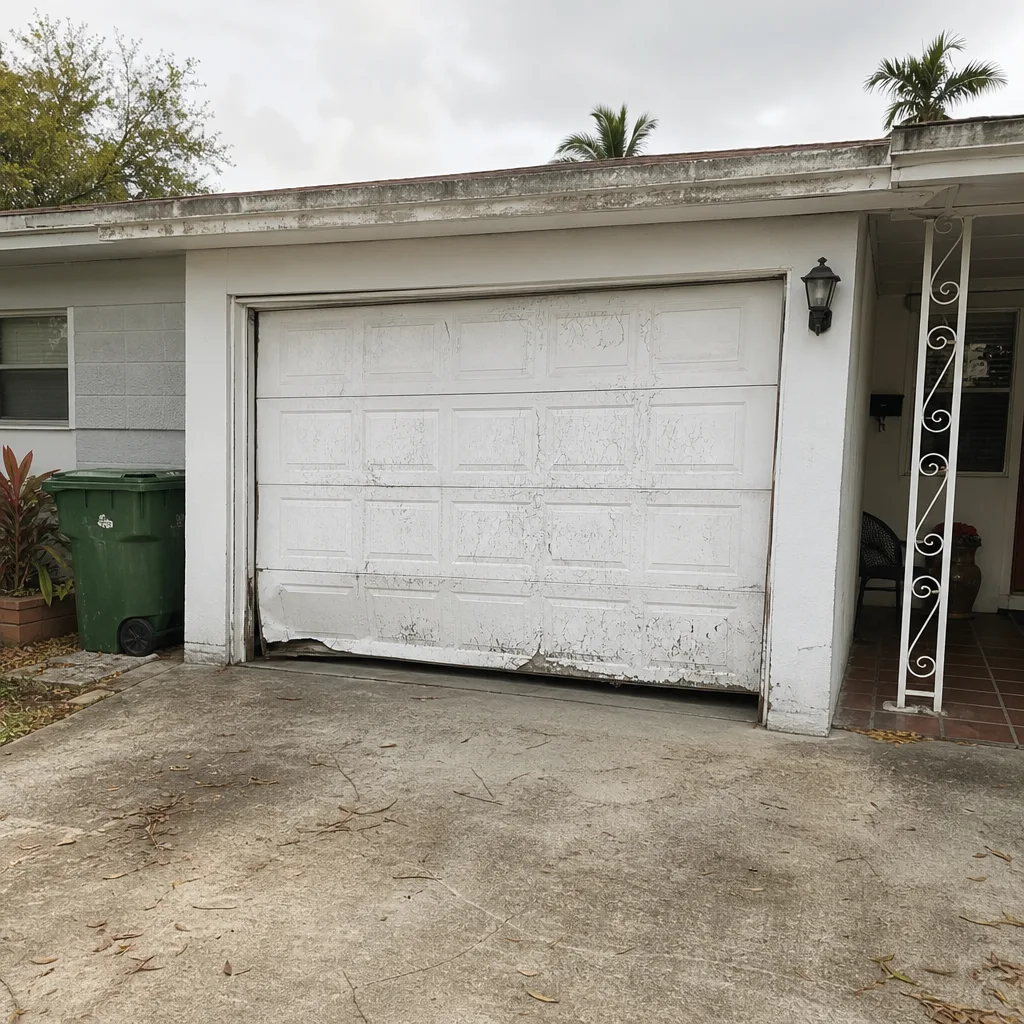 Before
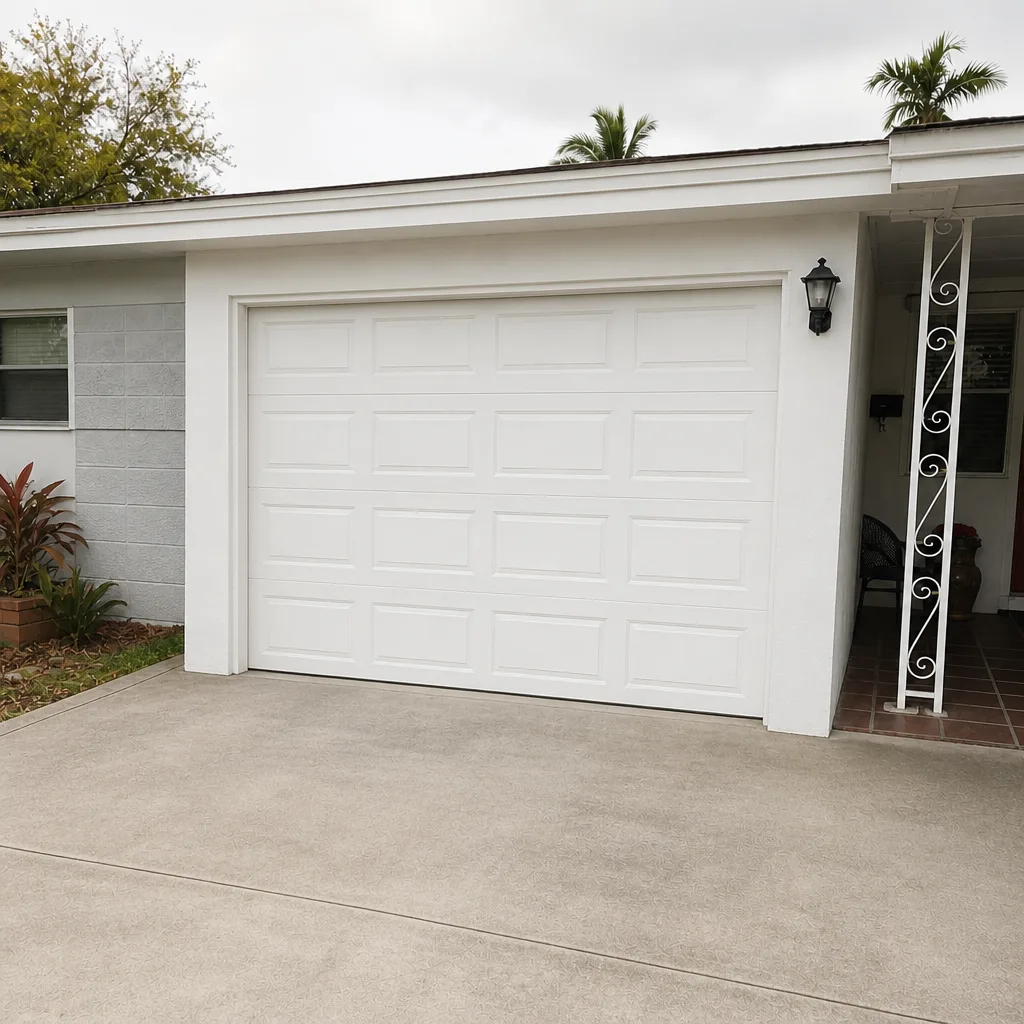 After
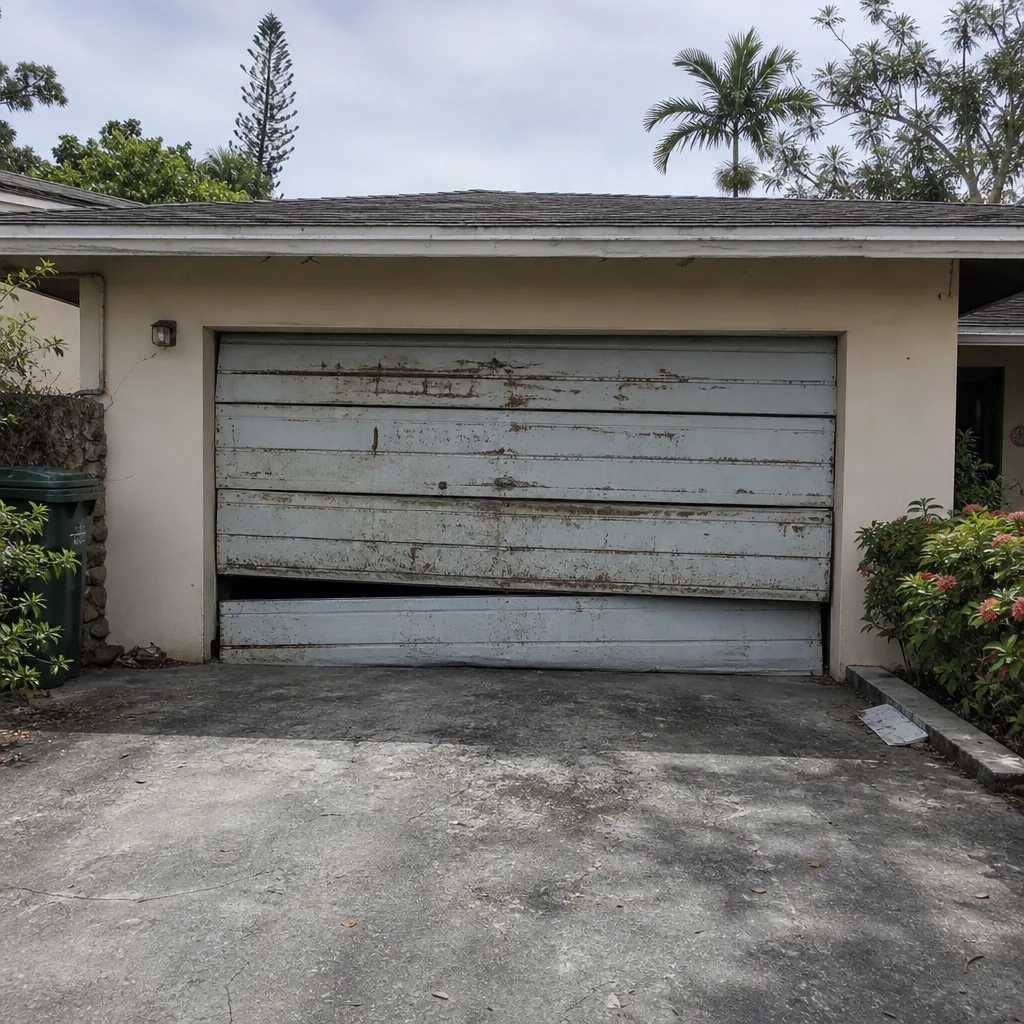 Before
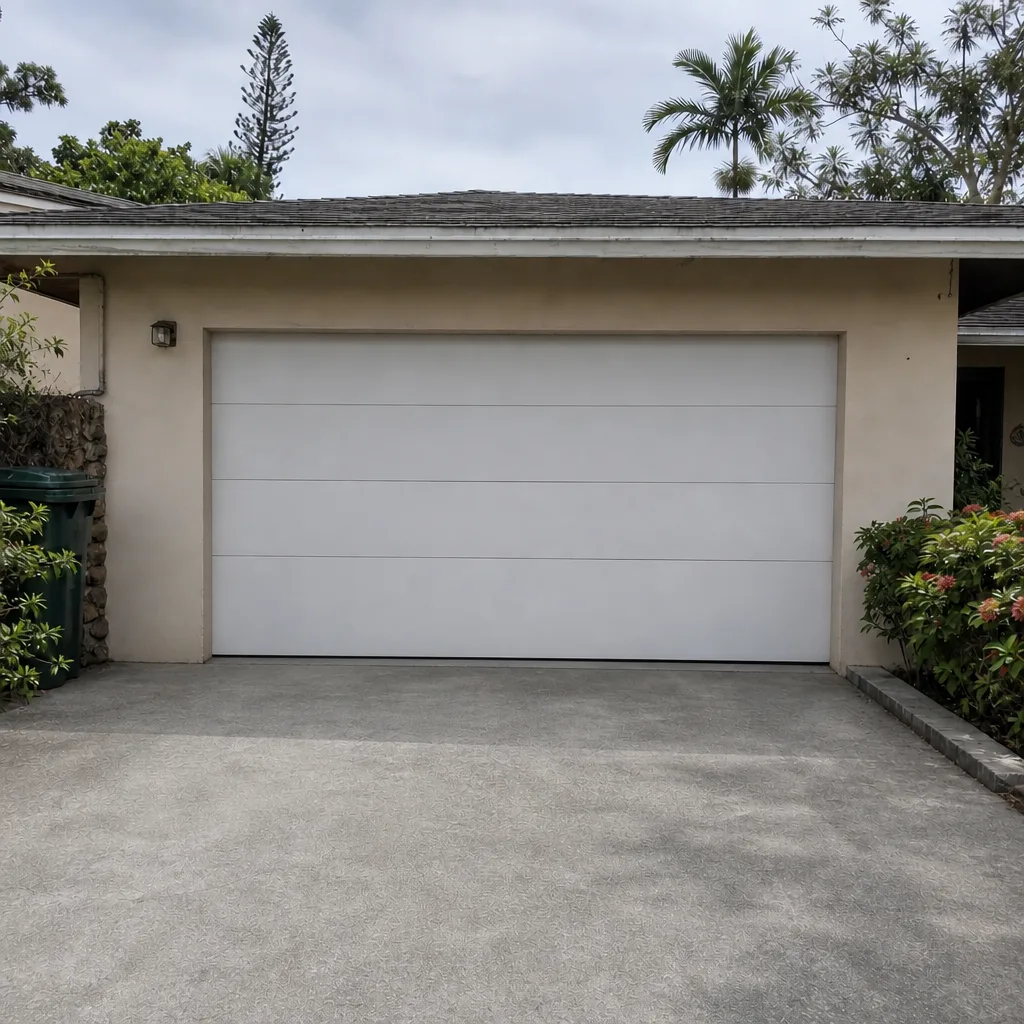 After
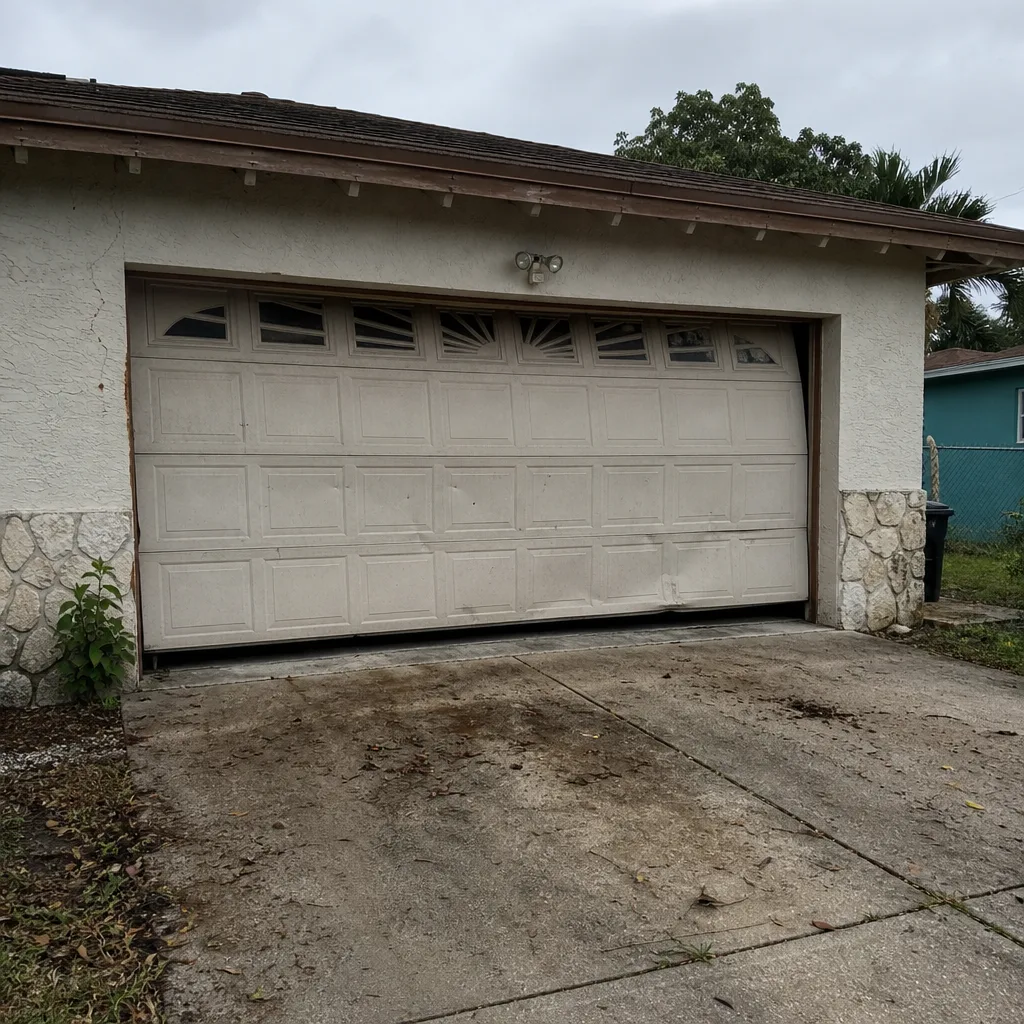 Before
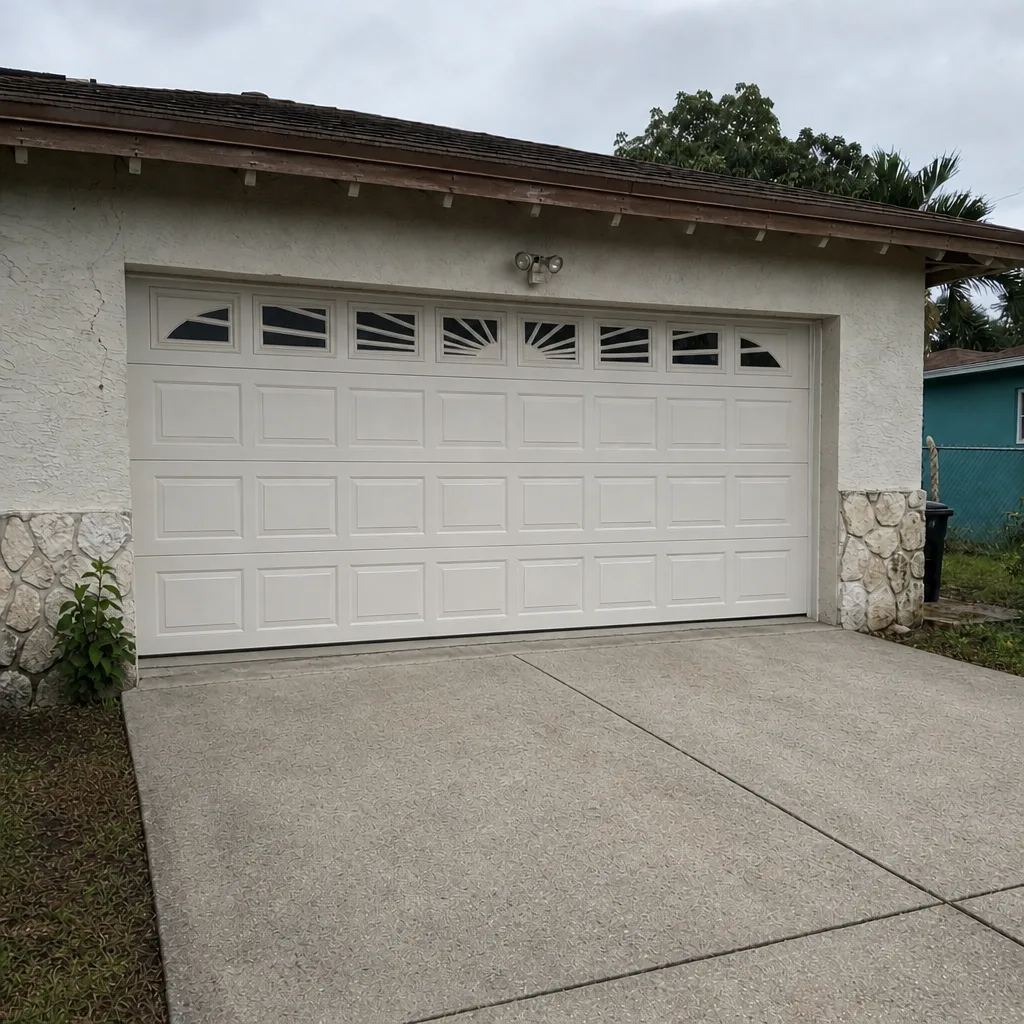 After
When to Call a Professional
Some garage door problems are safe to watch. Others need a technician the same day. Call a professional when a spring breaks or a cable snaps, when the door won’t close fully or reverses on its own, when the operator runs but the door doesn’t move, when you hear a loud bang from the garage, or when the door is visibly off its track. Those situations involve either high-tension hardware or a safety-reversal issue that needs testing and resetting. Call us when a door blocks a car, compromises the home’s security, or stops a business from operating – that’s the emergency side, and it’s a core part of our service. North Miami Garage Door Repair offers free estimates in North Miami – call (888) 923-0242. We answer 24/7. Fast dispatch from 7am to 7pm, Sunday through Friday. Our technicians have up to 9 years of experience on the brands we cover, and the local pro who turns up is licensed and insured as state requirements demand.
Frequently Asked Questions
Yes, in most cases. Replacing a garage door in Miami-Dade County typically requires a permit, and the door must meet the wind-load and product-approval requirements for the address. Ask your city’s building department for the exact paperwork, inspection sequence, and documentation requirements, since the details can vary. Call (888) 923-0242 for a free estimate that includes the permit and hardware costs itemized.
Spring repair is priced per spring, and in the North Miami market a single spring repair is typically in the low hundreds, with a matched pair running roughly twice that because both usually get replaced together. The written estimate sets the final price, and the price is quoted and agreed before any work starts. Call (888) 923-0242 for an exact quote – estimates are free.
No – the price we quote before the work begins is the price. The estimate is written, itemized, and agreed before any work starts, and it covers the parts, labor, and any disposal or permit line items separately. If something unexpected comes up mid-job, we stop, show you what we found, and re-quote before continuing. Call (888) 923-0242 for an estimate.
Yes. The local pro who performs the work is licensed and insured as the state requires, and we connect you with vetted professionals who meet Florida’s licensing standards. Our technicians have up to 9 years of experience on the major garage door brands, including LiftMaster, Chamberlain, Genie, Clopay, Amarr, Wayne Dalton, Craftsman, and Raynor. Call (888) 923-0242 to schedule.
For repairs and emergencies, often yes. Emergency garage door repair is a core part of what we do, not a premium add-on, and we keep fast dispatch available from 7am to 7pm, Sunday through Friday. We answer 24/7, and a call outside dispatch hours is booked into the next opening. Call (888) 923-0242. Installation and replacement are scheduled jobs, so we book those around a measure and a written quote.
Sometimes reinforcement is enough and sometimes it isn’t. Post-and-strut retrofit systems can bring some doors up to a required design pressure, but they only work if the existing door, tracks, and anchoring can accept them – and only if the retrofit system has product approval for Miami-Dade. A wind-rated replacement is often the more reliable path when the door is already old or the tracks are in poor condition. Call (888) 923-0242 and we’ll assess which route fits your door and your building department’s requirements.
The Bottom Line
Garage doors in North Miami aren’t just a convenience feature. They’re a structural component subject to the country’s strictest wind-load code, a code-compliance item that shows up at inspection and resale, and a piece of hardware that gets beaten up by this climate faster than most guides admit. Choose materials that resist corrosion, confirm the NOA and the design pressure before you buy, keep the HOA paperwork in order, and service springs and cables before they fail. Repair is usually the right answer on a sound door; replacement usually wins when the structure, rating, or age point that way. If you’d rather have a straight technical read on your own door, we’re here. Call North Miami Garage Door Repair at (888) 923-0242 for a free estimate. We answer 24/7. Fast dispatch from 7am to 7pm, Sunday through Friday. The written estimate sets the price, and it’s agreed before any work starts.
Written by the team at North Miami Garage Door Repair.